

Collectionner des affiches d'art : qu'est-ce que c'est et pourquoi c'est important ?
Feb 17, 2026
Trouver l'affiche parfaite peut s'avérer complexe, surtout quand chaque mur mérite d'être orné. Pour les jeunes collectionneurs et les passionnés de culture pop, l'univers des affiches allie style personnel et histoire culturelle, à travers des styles allant de l'Art nouveau aux créations contemporaines. Cet article dissipe les idées reçues et met en lumière la signification artistique et l'authenticité des affiches, vous permettant ainsi de faire des choix éclairés, que vous recherchiez des classiques vintage ou des œuvres modernes audacieuses.
Table des matières
- Définir la collection d'affiches d'art et les idées fausses qui y sont associées
- Exploration des types et des styles d'affiches artistiques
- Caractéristiques clés qui influencent la collection
- Détermination des facteurs d'authenticité et de valeur
- Cadre juridique et questions de propriété
- Risques courants et comment les éviter
Points clés à retenir
| Indiquer | Détails |
|---|---|
| Comprendre le collectionnisme | La collection d'affiches d'art nécessite la connaissance de leur signification artistique, de leur contexte historique, de leur rareté et de leur état afin d'en évaluer la véritable valeur. |
| Divers types d'affiches | Les collectionneurs devraient explorer différents types d'affiches artistiques, notamment les affiches anciennes, publicitaires, politiques et contemporaines, afin de constituer des collections complètes. |
| Importance de l'authentification | Une authentification rigoureuse, par le biais de recherches sur la provenance et de consultations d'experts, est essentielle pour vérifier l'authenticité des pièces et garantir la sécurité de l'investissement. |
| Gestion juridique et des risques | La connaissance des cadres juridiques et la mise en œuvre de mesures de protection sont essentielles pour préserver les collections d'affiches d'art contre les risques tels que le vol et les dommages environnementaux. |
Définir la collection d'affiches d'art et les idées fausses qui y sont associées
Collectionner des affiches d'art est une pratique subtile qui va bien au-delà du simple achat d'objets décoratifs. C'est une forme sophistiquée de préservation culturelle et d'expression personnelle, profondément ancrée dans la compréhension des mouvements artistiques, des contextes historiques et de la narration visuelle. Collectionner des estampes et des affiches implique plus qu'une acquisition fortuite : c'est une démarche intellectuelle qui requiert connaissances, discernement et passion.
Contrairement à une idée répandue, collectionner des affiches d'art ne consiste pas simplement à acquérir au hasard des estampes visuellement attrayantes. Cela implique une analyse approfondie de plusieurs facteurs clés qui déterminent la valeur de collection d'une affiche :
- Importance artistique : Qualité esthétique et mérite créatif de l'affiche
- Contexte historique : L'environnement culturel ou politique dans lequel l'affiche a été créée
- Rareté : Estampes ou affiches en édition limitée provenant de périodes spécifiques.
- Réputation de l'artiste : Œuvres d'artistes renommés ou émergents influents
- État : État de conservation et intégrité physique générale de l'affiche
Nombre de collectionneurs potentiels se méprennent sur ce qui confère une réelle valeur à une affiche. Certains supposent que l'ancienneté est un gage de valeur, tandis que d'autres pensent que seules les affiches vintage ou très anciennes ont un intérêt de collection. En réalité, les affiches d'art contemporain peuvent être tout aussi importantes, notamment celles qui représentent des mouvements artistiques émergents ou qui sont créées par des graphistes novateurs.
Conseil de pro : renseignez-vous sur le mouvement artistique et le contexte historique d’une affiche avant de l’acheter, car ces connaissances augmentent considérablement sa valeur potentielle de collection.
Exploration des types et des styles d'affiches artistiques
L'affiche artistique constitue un médium visuel dynamique et diversifié, englobant de multiples styles, genres et mouvements artistiques. Les styles d'affiches historiques ont connu une évolution spectaculaire du XIXe siècle à travers diverses périodes artistiques, reflétant des transformations culturelles et esthétiques complexes. La compréhension de ces styles est essentielle pour les collectionneurs souhaitant constituer des collections significatives et représentatives.
Le paysage des affiches artistiques peut être globalement catégorisé en plusieurs types distincts :
- Affiches vintage : Issues des mouvements artistiques du début du XXe siècle
- Affiches publicitaires : Créations commerciales promouvant des produits ou des événements
- Affiches politiques : Représentations visuelles de déclarations sociales et politiques
- Affiches de mouvements artistiques : Représentant des styles artistiques spécifiques comme l'Art nouveau ou le modernisme
- Affiches d'art contemporain : Créations émergentes reflétant les tendances artistiques actuelles
Chaque type d'affiche possède des caractéristiques uniques qui le distinguent des autres. Les systèmes de classification des affiches révèlent qu'elles ne sont pas de simples objets décoratifs, mais des artefacts de communication complexes qui immortalisent des moments précis de l'histoire culturelle et artistique. Certains collectionneurs se spécialisent dans des genres particuliers, tandis que d'autres apprécient la riche diversité des styles et des époques.
Collectionner des affiches aujourd'hui allie importance historique et expression artistique contemporaine. Les nouveaux styles d'affiches artistiques mêlent souvent techniques traditionnelles et design numérique, créant des formes hybrides qui remettent en question les catégorisations classiques. Cette évolution garantit que la collection d'affiches demeure un domaine dynamique et passionnant, se réinventant sans cesse grâce à des récits visuels novateurs.

Voici une analyse de la manière dont les différents types d'affiches contribuent à la diversité d'une collection :
| Type d'affiche | Atout majeur | Défi de collecte |
|---|---|---|
| Affiches vintage | Esthétique historique | Vérification d'authenticité |
| Affiches publicitaires | Instantanés de la culture pop | fluctuation de la valeur marchande |
| Affiches politiques | impact social | lacunes en matière de provenance |
| Affiches contemporaines | Tendances artistiques récentes | Évolution rapide du style |
Conseil de pro : Élaborez une stratégie de collection ciblée en effectuant des recherches sur le contexte historique et la signification artistique des différents styles d’affiches avant de procéder à des acquisitions.
Caractéristiques clés qui influencent la collection
La valeur d'une affiche de collection repose sur une interaction complexe de multiples facteurs subtils qui transforment une simple image imprimée en un objet de collection précieux. Si l'attrait visuel compte, les collectionneurs avertis évaluent les affiches avec une grande finesse, prenant en compte de nombreuses caractéristiques intrinsèques et extrinsèques. La valeur marchande d'une affiche dépend d'une combinaison subtile d'éléments qui dépassent largement la simple esthétique.
Les principaux facteurs qui influencent considérablement le statut de collection d'une affiche sont les suivants :
- Réputation de l'artiste : Affiches créées par des artistes renommés ou émergents influents
- Importance historique : Affiches représentant des moments culturels ou artistiques charnières
- État de l'estampe : Préservation physique et qualité d'origine de l'estampe
- Rareté : Tirages en édition limitée ou séries de production uniques
- Provenance : Historique documenté et origine de la pièce
- Authenticité : Origine vérifiée et détails de production d'origine
Les collectionneurs contemporains reconnaissent de plus en plus que la valeur d'une affiche dépasse les critères traditionnels. Les tendances émergentes suggèrent que sa signification contextuelle – comme son rôle dans les mouvements sociaux ou les révolutions artistiques – peut considérablement rehausser son statut de pièce de collection. Certaines affiches acquièrent de la valeur grâce à leur capacité à incarner des récits culturels spécifiques ou à représenter des moments clés de l'histoire du design.
Le processus d'authentification et de conservation joue un rôle crucial dans la détermination de la valeur de collection à long terme. Des facteurs tels que les techniques d'impression originales, la qualité du papier, la durabilité de l'encre et les conditions de stockage peuvent avoir un impact considérable sur la valeur marchande et l'importance historique d'une affiche. Les collectionneurs avertis investissent non seulement dans l'objet visuel, mais aussi dans l'histoire et la signification culturelle que recèle chaque pièce soigneusement conservée.
Conseil de pro : documentez et préservez toujours les détails relatifs à l’état d’origine, notamment les techniques d’impression et la provenance, car ces facteurs peuvent considérablement augmenter la valeur de collection future d’une affiche.
Détermination des facteurs d'authenticité et de valeur
L'authentification des affiches d'art est un processus complexe qui allie analyse scientifique, expertise et recherche méticuleuse. Collectionneurs et professionnels de l'art emploient des stratégies sophistiquées pour vérifier l'authenticité et la valeur intrinsèque des affiches, transformant ainsi ce qui pourrait n'être qu'un simple document imprimé en un précieux artefact culturel.
Les principales méthodologies permettant de déterminer l'authenticité et la valeur comprennent :
- Recherche de provenance : Retracer l'historique complet de propriété
- Analyse stylistique : Comparaison des caractéristiques artistiques avec des œuvres authentiques connues
- Examen des matériaux : Étude des techniques d'impression et des matériaux originaux
- Consultation d'experts : Tirer parti des connaissances spécialisées des historiens de l'art
- Tests scientifiques : Utilisation de méthodes technologiques avancées pour vérifier l'origine
- Évaluation de la demande du marché : Évaluation de l'intérêt actuel des collectionneurs
La vérification scientifique joue un rôle crucial dans l'établissement de l'authenticité d'une affiche. Des techniques avancées telles que l'analyse des pigments, la datation du papier et l'étude des méthodes d'impression peuvent apporter des preuves irréfutables quant à ses véritables origines. Ces méthodes vont au-delà de l'inspection visuelle, offrant aux collectionneurs des données concrètes sur le contexte historique et la valeur potentielle de l'œuvre.
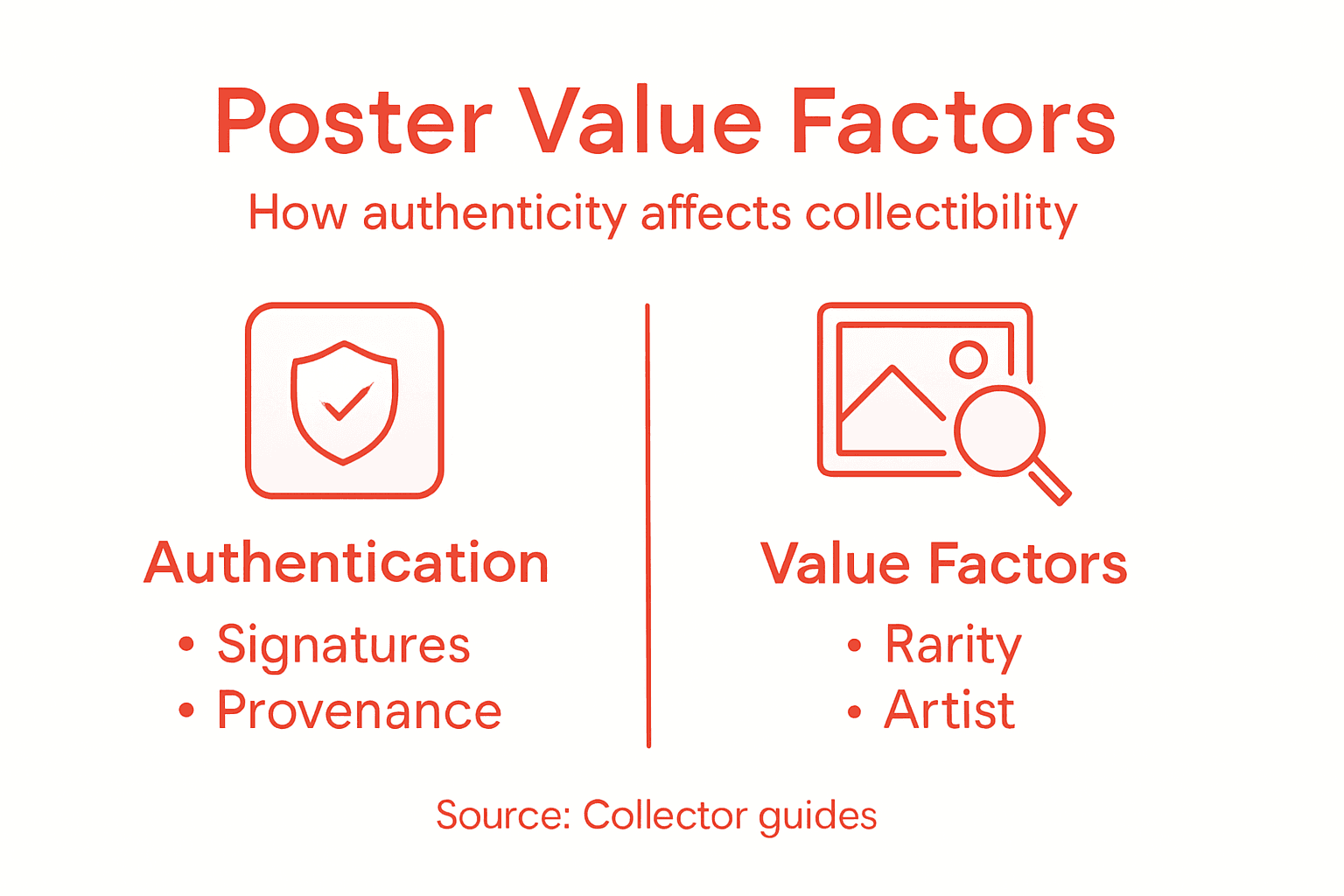
L'alliance de la documentation et de l'analyse d'experts crée un cadre d'authentification complet. Les collectionneurs avertis savent que la vérification d'authenticité ne se limite pas à la confirmation de l'origine, mais vise à comprendre l'histoire complète de l'affiche. Chaque document authentifié apporte une nouvelle dimension à l'objet, ce qui peut considérablement accroître sa valeur marchande et son statut d'objet de collection.
Ce tableau récapitule comment les méthodes d'authentification apportent de la valeur ajoutée aux collecteurs :
| Approche d'authentification | Ce que cela vérifie | valeur ajoutée |
|---|---|---|
| Recherche de provenance | Historique complet de propriété | Confiance en matière d'investissement |
| Analyse scientifique | confirmation de l'âge et du matériau | confiance du marché de la revente |
| Consultation d'experts | Exactitude artistique et historique | crédibilité de la documentation |
Conseil de pro : Investissez dans des services d’authentification professionnels et conservez une documentation complète pour vos acquisitions d’affiches les plus précieuses.
Cadre juridique et questions de propriété
L'acquisition d'affiches d'art implique un ensemble complexe de considérations juridiques qui vont bien au-delà du simple achat et de la possession. Les collectionneurs doivent se familiariser avec des réglementations nationales et internationales complexes régissant l'acquisition, le transfert et la conservation des affiches d'art, garantissant ainsi le respect des lois et des pratiques de collection éthiques.
Les principaux points juridiques à prendre en compte pour les collectionneurs d'affiches d'art sont les suivants :
- Protection du droit d'auteur : Droits des artistes et créateurs originaux
- Lois sur la propriété intellectuelle : Restrictions relatives à la reproduction et à la distribution
- Documentation de provenance : Établir un historique de propriété clair
- Réglementation relative aux transferts internationaux : restrictions sur les ventes et les mouvements transfrontaliers
- Exigences d'authentification : Normes juridiques pour la vérification de l'origine des œuvres d'art
- Protection du patrimoine culturel : Réglementation prévenant le déplacement des biens culturels
La complexité des questions de propriété légale est particulièrement marquée dans le cadre des transactions transfrontalières. La réglementation relative à la propriété des œuvres d'art varie considérablement d'une juridiction à l'autre, créant ainsi des pièges potentiels pour les collectionneurs non avertis. Certains pays imposent des contrôles stricts à l'exportation, tandis que d'autres disposent de lois spécifiques protégeant le patrimoine culturel. Collectionner des affiches à l'international devient donc une activité complexe qui exige des recherches juridiques approfondies et l'accompagnement de professionnels.
La compréhension de ces cadres juridiques est essentielle pour une collection responsable. Les collectionneurs sérieux doivent conserver une documentation complète, incluant les contrats d'achat, les certificats d'authenticité et les documents de provenance. Ces documents protègent non seulement l'investissement du collectionneur, mais contribuent également à la préservation du patrimoine des affiches artistiques, tant sur le plan scientifique que culturel.
Conseil de pro : Consultez un spécialiste du droit de l’art avant d’effectuer d’importantes acquisitions internationales d’affiches afin de garantir votre pleine conformité légale et de protéger votre investissement.
Risques courants et comment les éviter
La gestion des risques liés aux collections d'art exige une approche stratégique et globale qui dépasse la simple conservation. Les collectionneurs doivent anticiper et gérer proactivement les menaces potentielles pesant sur leurs investissements en affiches d'art, conscients que la prévention est bien plus efficace que de tenter de réparer les dommages ou les pertes importants.
Les principaux risques auxquels sont confrontés les collectionneurs d'affiches d'art sont les suivants :
- Dommages environnementaux : exposition à l’humidité, aux variations de température et à la lumière directe du soleil
- Détérioration physique : Techniques de manipulation, de stockage et de montage inappropriées
- Vol et sécurité : Protection insuffisante contre les accès non autorisés
- Volatilité du marché : fluctuations imprévisibles de l'intérêt et de l'évaluation des collectionneurs
- Contrefaçon et authentification : Acquisition potentielle de pièces contrefaites
- Lacunes d'assurance : Couverture insuffisante ou inadaptée pour les collections spécialisées
L'atténuation de ces risques exige une stratégie à plusieurs volets. Une protection complète implique la création d'un environnement contrôlé minimisant les sources potentielles de dommages. Cela comprend l'investissement dans des solutions de stockage professionnelles, la mise en œuvre de protocoles de manipulation rigoureux et la tenue d'une documentation détaillée sur l'état et la provenance de chaque pièce. Des espaces climatisés à humidité et température contrôlées, des techniques de montage d'archives protectrices et des systèmes de sécurité avancés constituent des investissements essentiels pour les collectionneurs avertis.
L'assurance et la documentation jouent un rôle crucial dans la gestion des risques. Les collectionneurs devraient collaborer avec des assureurs spécialisés dans l'art qui comprennent la fragilité particulière des collections d'affiches. Des expertises professionnelles régulières, des rapports d'état détaillés et une documentation photographique complète constituent une protection essentielle contre les pertes potentielles et permettent une évaluation précise.
Conseil de pro : Créez des archives numériques et physiques complètes de votre collection, comprenant des images haute résolution, des rapports d’état et des documents de provenance, afin de protéger votre investissement et de faciliter d’éventuelles demandes d’indemnisation auprès de votre assurance.
Rehaussez votre expérience de collection d'affiches d'art grâce à des produits uniques et de qualité.
Si vous êtes passionné par la collection d'affiches d'art et que vous appréciez la valeur de leur signification artistique, de leur rareté et de leur authenticité, comme le souligne l'article « Qu'est-ce que la collection d'affiches d'art et pourquoi est-elle importante ? », vous comprenez l'importance de vous entourer d'objets exclusifs inspirés par l'art, en harmonie avec votre collection personnelle. Sur ArtoramaShop.com, vous trouverez une sélection pointue d'affiches et de vêtements de haute qualité sur le thème de l'art, mettant en vedette des œuvres d'artistes célèbres tels que Picasso et Banksy. Ces produits offrent une façon originale d'exprimer votre amour de l'art, au-delà de la collection traditionnelle.

Découvrez des pièces uniques qui fusionnent styles artistiques classiques et contemporains, et enrichissez votre espace personnel ou votre garde-robe tout en rendant hommage aux récits culturels qui sous-tendent chaque création. N'attendez plus pour agrandir votre collection avec des imprimés exclusifs et des vêtements artistiques qui reflètent votre passion. Explorez la collection dès aujourd'hui sur ArtoramaShop.com et laissez l'art s'exprimer dans tous les aspects de votre vie.
Foire aux questions
Qu'est-ce que la collection d'affiches d'art ?
Collectionner des affiches d'art consiste à acquérir des œuvres imprimées représentatives de différents styles, mouvements artistiques et moments culturels. C'est une pratique subtile qui allie expression personnelle et préservation du patrimoine culturel.
Quels facteurs déterminent la valeur d'une affiche artistique ?
La valeur d'une affiche d'art dépend de son importance artistique, de son contexte historique, de sa rareté, de la réputation de l'artiste et de son état. Il est essentiel pour les collectionneurs de prendre en compte ces éléments lors de l'évaluation d'acquisitions potentielles.
Comment puis-je garantir l'authenticité d'une affiche d'art ?
Pour garantir l'authenticité d'une affiche, les collectionneurs peuvent recourir à des méthodes telles que la recherche de provenance, l'analyse stylistique, l'examen des matériaux, la consultation d'experts et les tests scientifiques. Ces approches permettent de vérifier l'origine et l'importance historique de l'affiche.
Quels sont les risques courants liés à la collection d'affiches d'art ?
Les risques courants comprennent les dommages environnementaux, la détérioration physique, le vol, la volatilité du marché, le risque de contrefaçon et les lacunes en matière d'assurance. Les collectionneurs peuvent se prémunir contre ces risques grâce à un stockage adéquat, une documentation appropriée, des mesures de sécurité et des polices d'assurance spécialisées.
Recommandé
- Pourquoi acheter des affiches d'art de collection : valeur et impact – Boutique Art-O-Rama
- Pourquoi acheter des affiches d'art de collection : valeur et impact – Boutique Art-O-Rama
- Pourquoi acheter des affiches d'art de collection : valeur et impact – Boutique Art-O-Rama
- Pourquoi acheter des affiches d'art de collection : valeur et impact – Boutique Art-O-Rama

