

Role of graphic art in fashion: 40% sales boost
Mar 06, 2026
Collaborations involving famous artists’ artwork in fashion lines boost sales by up to 40%, proving that graphic art transforms clothing into cultural currency. This fusion of visual expression and wearable design has reshaped how young adults and art enthusiasts connect with fashion. You’ll discover how graphic art evolved in fashion, the technology behind quality apparel, and how to identify authentic artist-inspired pieces.
Table of Contents
- Introduction To Graphic Art In Fashion
- Historical Context And Evolution
- Technical Processes In Graphic Art Fashion
- Artist Influence And Pop Culture Integration
- Common Misconceptions About Graphic Art Apparel
- Consumer Impact And Identity Expression
- Decision Framework For Choosing Authentic Graphic Art Apparel
- Conclusion And Practical Application
- Explore Authentic Graphic Art Apparel At Art-O-Rama Shop
- Frequently Asked Questions
Key takeaways
| Point | Details |
|---|---|
| Art meets fashion | Graphic art transforms clothing into wearable cultural statements that blend visual expression with personal style. |
| Technology drives quality | Advanced printing techniques enable high-resolution graphics that capture artistic detail and durability. |
| Artist collaborations sell | Famous artist partnerships increase fashion appeal and drive significant sales growth in youth markets. |
| Authenticity matters | Genuine graphic apparel requires proper licensing, quality printing, and artist authorization. |
| Identity expression | Consumers use art-inspired fashion to communicate cultural values and strengthen social connections. |
Introduction to graphic art in fashion
Graphic art in fashion refers to visual designs, illustrations, or artwork applied directly to clothing surfaces. These designs transform garments into canvases that carry artistic narratives, cultural messages, and aesthetic statements. Unlike traditional fashion decoration, graphic art emphasizes recognizable artistic styles, movements, or specific artist signatures.
The concept emerged during the 20th century as art movements began influencing commercial design. Artists and designers recognized that clothing could serve as both functional wear and cultural expression. This intersection created opportunities for broader audiences to engage with art beyond gallery walls.
For young adults and art enthusiasts, graphic art apparel represents more than decoration. It communicates personal taste, cultural awareness, and artistic appreciation. Wearing designs inspired by Picasso, Matisse, or contemporary street artists signals belonging to specific cultural communities. This significance explains why graphic art fashion continues growing among consumers seeking meaningful self-expression through their wardrobe choices.
Historical context and evolution
The 1960s marked a turning point when pop art ignited graphic art integration into mainstream fashion. Artists like Andy Warhol and Roy Lichtenstein demonstrated that commercial imagery and bold graphics could carry artistic weight. Fashion designers quickly adopted these visual languages, printing comic book aesthetics and celebrity portraits onto clothing.
This pop art relevance extended through subsequent decades. The following table illustrates key periods in graphic art fashion evolution:
| Era | Milestone | Impact |
|---|---|---|
| 1960s | Pop art influence | Bold graphics and commercial imagery entered fashion |
| 1980s | Street art emergence | Graffiti aesthetics shaped urban apparel |
| 2000s | Digital printing breakthrough | Complex designs became affordable and accessible |
| 2020s | Artist collaborations surge | Licensed partnerships drove 40% sales increases |
Artist collaborations evolved from occasional experiments to strategic partnerships. Major fashion brands recognized that featuring renowned artists’ work attracted new demographics. These collaborations offered mutual benefits: artists reached broader audiences while brands gained cultural credibility.
Technological advances played equally crucial roles. Early graphic apparel relied on limited printing methods that restricted design complexity. Innovations in digital printing, heat transfer, and direct-to-garment technology removed these barriers. Suddenly, intricate artwork with multiple colors and fine details could be reproduced affordably on fabric.
Key technological milestones include:
- Introduction of rotary screen printing for faster production
- Development of water-based inks for softer, more durable prints
- Digital direct-to-garment printing enabling photographic quality
- Sublimation techniques for all-over graphic coverage
Technical processes in graphic art fashion
Understanding printing methods helps you evaluate quality when shopping for graphic apparel. Two primary techniques dominate the market: screen printing and digital printing. Each offers distinct advantages depending on design complexity and production scale.
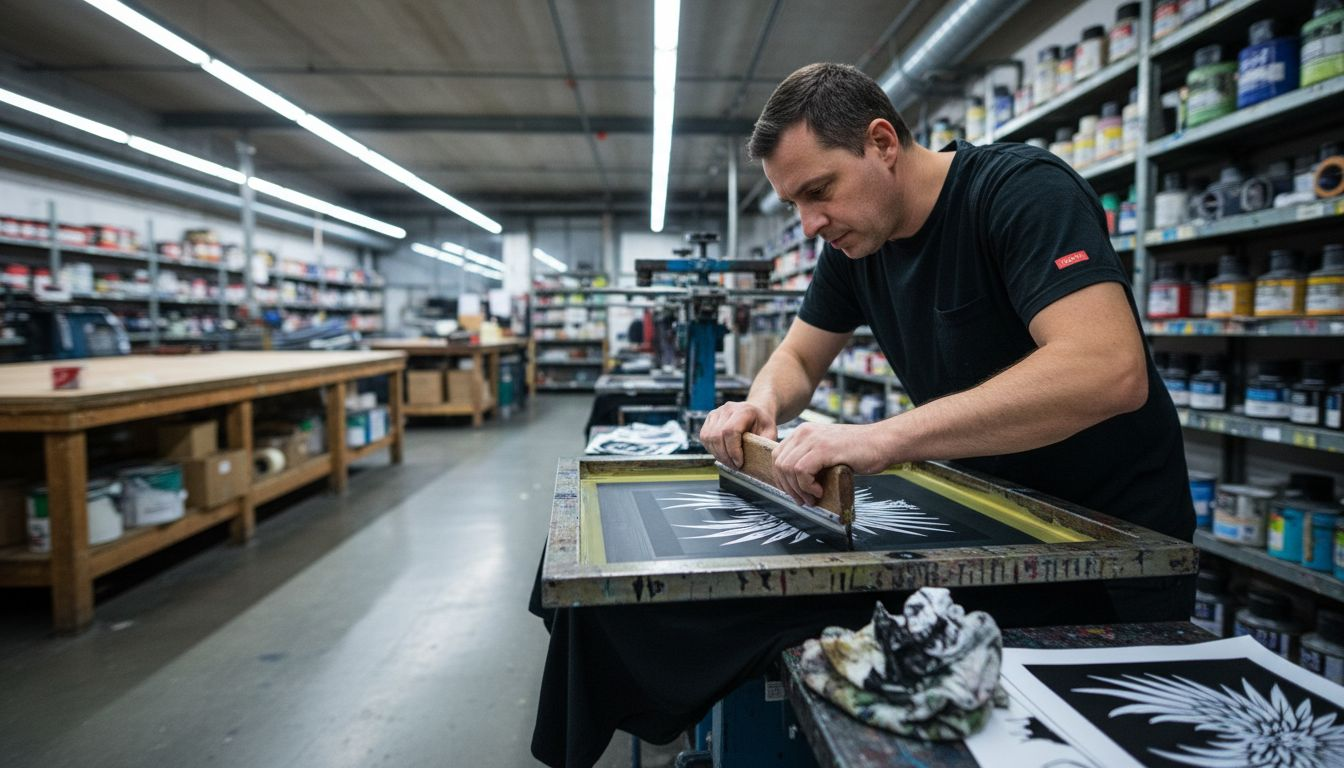
Screen printing involves pushing ink through mesh stencils onto fabric. This method works best for simple designs with limited colors. It’s cost-effective for large production runs but struggles with intricate details. Screen printed graphics typically last through many washes when properly cured.
Digital printing offers up to 300 DPI with superior color fidelity versus screen printing. This technique applies ink directly from digital files onto fabric without stencils. The result captures photographic quality and complex gradients that screen printing cannot match. Digital printing excels for small batches and designs featuring detailed artwork.
The following comparison clarifies key differences:
| Feature | Screen Printing | Digital Printing |
|---|---|---|
| Resolution | 50-100 DPI | 200-300 DPI |
| Color range | Limited (typically 1-6 colors) | Unlimited gradients |
| Best for | Large orders, simple graphics | Small runs, complex art |
| Cost structure | High setup, low per-unit | Low setup, moderate per-unit |
| Durability | Excellent with proper curing | Very good with quality inks |
Recent innovations have reduced costs while improving design fidelity. Hybrid techniques combine digital precision with screen printing durability. Eco-friendly water-based inks now match traditional plastisol performance. These advances make high-quality graphic art apparel accessible to smaller brands and niche markets.
Pro Tip: Check garment labels for printing method details. Quality brands disclose their techniques because superior printing is a selling point worth advertising.
Artist influence and pop culture integration
Famous artists lend immediate credibility and narrative depth to graphic apparel. When you wear a shirt featuring Banksy’s street art or Basquiat’s neo-expressionism, you’re not just displaying decoration. You’re signaling cultural literacy and artistic appreciation. This connection explains why collaborations with famous artists boost fashion sales by up to 40%.
Pop culture iconography creates powerful bridges between artistic expression and youth identity. Musicians, film characters, and cultural movements provide familiar reference points that resonate emotionally. Graphic apparel featuring these elements helps wearers communicate belonging to specific communities or appreciation for particular cultural moments.
The influence operates on multiple levels:
- Cultural validation: Artist endorsement elevates apparel from commodity to collectible
- Narrative richness: Each design carries stories about art movements and creative vision
- Social signaling: Wearing specific artists communicates taste and cultural awareness
- Emotional connection: Familiar artwork triggers positive associations and memories
Young adults particularly value this integration because fashion serves as identity expression. Choosing apparel inspired by pop art styles demonstrates aesthetic preferences and cultural engagement. It’s why understanding pop art influence remains relevant for fashion-conscious consumers in 2026.
Market data confirms this pattern. Licensed artist merchandise consistently outperforms generic graphic apparel in sales and consumer loyalty. Buyers willingly pay premium prices for authentic artist collaborations because they recognize the added cultural and artistic value. This willingness sustains the growing market for high-quality, artist-inspired fashion.
Common misconceptions about graphic art apparel
Many consumers mistakenly view graphic art apparel as merely decorative rather than an intentional art form. This misconception undervalues the creative process behind quality designs. Authentic graphic art fashion involves careful curation, artist collaboration, and technical expertise to translate artwork onto fabric while maintaining artistic integrity.
Another widespread myth suggests all graphic apparel offers equivalent quality and authenticity. Reality shows massive variation in licensing legitimacy and production standards. Mass-produced prints often use unauthorized reproductions of famous artwork, denying artists proper compensation. These knockoffs typically employ inferior printing methods that fade or crack quickly.
The following points clarify key misunderstandings:
-
Misconception: Graphic prints are all essentially the same quality. Reality: Printing resolution, ink quality, and fabric choice create dramatic quality differences that affect durability and visual impact.
-
Misconception: Artist attribution doesn’t matter for fashion. Reality: Proper licensing ensures artists receive credit and compensation while guaranteeing authentic reproductions of their work.
-
Misconception: Higher prices just reflect brand markup. Reality: Premium pricing often indicates licensed artwork, superior printing technology, and better materials that justify the cost.
-
Misconception: Online product photos accurately represent print quality. Reality: Low-resolution images and color calibration issues mean you need to verify printing specifications separately.
Pro Tip: Look for explicit licensing statements on product pages. Phrases like “officially licensed” or “authorized collaboration” indicate legitimate artist partnerships rather than unauthorized reproductions.
Understanding these distinctions protects you from disappointing purchases while supporting artists and ethical retailers. Quality graphic art apparel represents investment in wearable culture that maintains value through superior construction and authentic artistic pedigree.
Consumer impact and identity expression
Choosing graphic art apparel profoundly influences how you express personal identity and cultural values. This fashion category enables wearers to communicate artistic appreciation, subcultural belonging, and aesthetic preferences without verbal explanation. Your clothing becomes a visual vocabulary that others can read and interpret.
Research shows consumers report enhanced self-expression when wearing art apparel for identity purposes. The emotional engagement stems from connecting personal taste with recognized artistic movements or specific artists. You’re not just covering your body but actively participating in cultural conversations about art, creativity, and style.
The impact manifests through several mechanisms:
- Cultural engagement: Wearing artist-inspired fashion demonstrates active participation in art appreciation communities
- Social connection: Shared artistic references create conversation starters and relationship bonds
- Authentic expression: Specific artist choices reflect genuine personal taste rather than mainstream trends
- Confidence building: Quality graphic apparel that aligns with your values enhances self-assurance
Young adults especially value this expressive potential because fashion serves as accessible identity communication. Unlike gallery visits or art collecting, graphic apparel offers daily opportunities to display cultural literacy and artistic sensibility. The medium democratizes art appreciation by making it portable and visible.
Emotional benefits extend beyond individual expression. Wearing recognizable artistic designs creates opportunities for social recognition and community building. When someone compliments your Matisse-inspired hoodie or recognizes the street artist on your shirt, it validates shared cultural knowledge. These micro-interactions strengthen feelings of belonging and cultural participation.
Decision framework for choosing authentic graphic art apparel
Navigating the graphic art fashion market requires systematic evaluation to ensure authenticity and quality. Following these sequential steps helps you make informed purchases that deliver lasting value and genuine artistic connection.
-
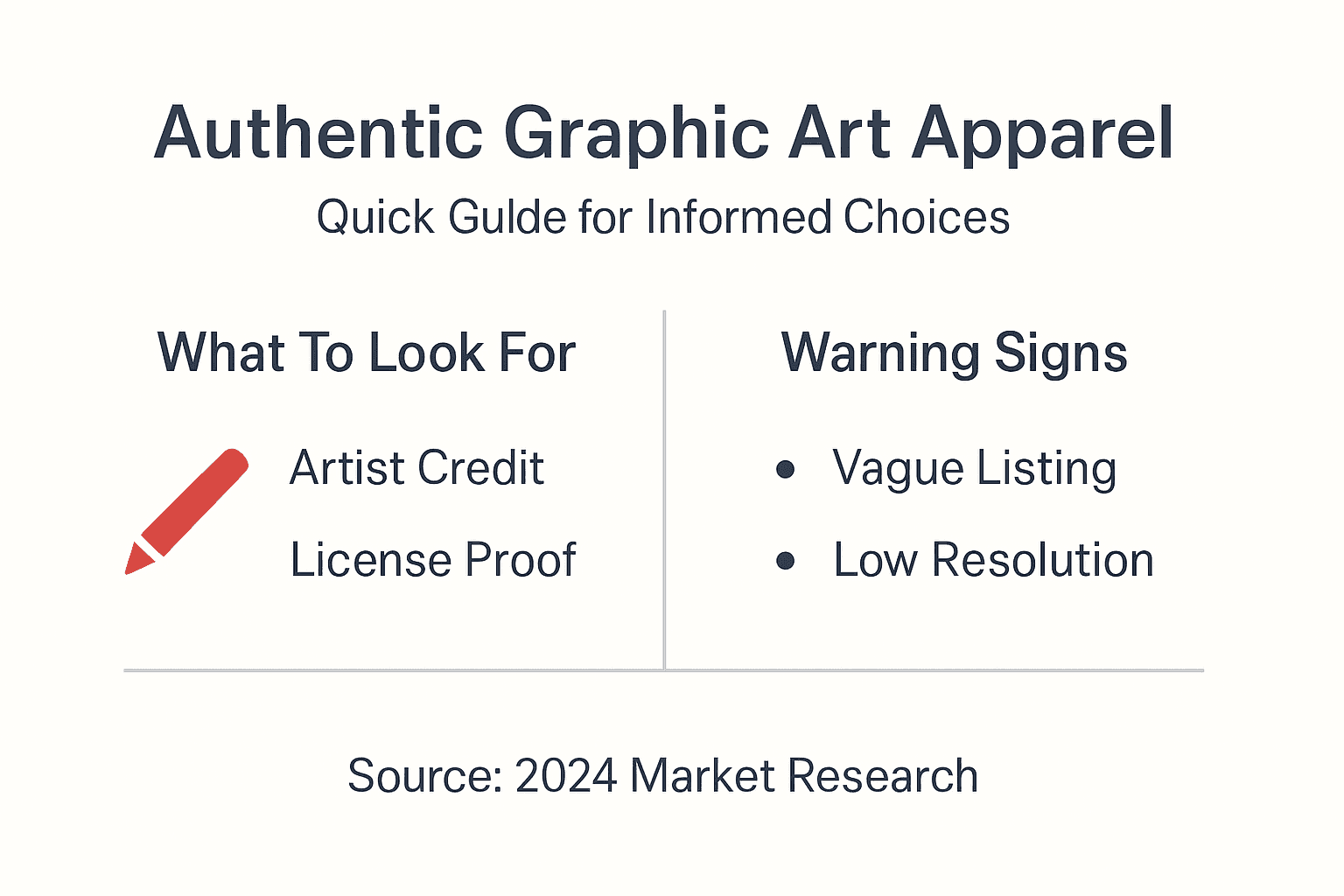
Identify the artist or art movement: Start by researching the creative source behind the design. Legitimate retailers clearly credit specific artists or artistic movements. Vague attributions like “inspired by modern art” often signal unauthorized reproductions. Look for explicit naming of artists like Picasso, Banksy, or Basquiat.
-
Evaluate printing method and resolution: Request technical specifications about printing techniques. Quality brands disclose whether they use digital printing, screen printing, or hybrid methods. Ask about resolution (aim for 200+ DPI for complex artwork) and ink types. Water-based or discharge inks typically indicate higher quality than standard plastisol.
-
Confirm licensing and authenticity: Verify that the brand holds proper licensing agreements. Check product descriptions for phrases like “officially licensed,” “authorized collaboration,” or artist estate approval. Legitimate retailers proudly display licensing information because it demonstrates ethical practices.
-
Assess exclusivity and style alignment: Consider whether the design reflects your personal aesthetic and offers reasonable exclusivity. Limited edition prints or curated collections typically provide better value than mass-market reproductions. Evaluate how the artwork aligns with your existing wardrobe and style identity.
The following table summarizes quality indicators:
| Quality Factor | Good Sign | Warning Sign |
|---|---|---|
| Artist credit | Specific artist named | Vague “art-inspired” language |
| Licensing | Explicit licensing statement | No mention of authorization |
| Printing specs | Detailed technical information | Missing or vague descriptions |
| Price point | Premium reflecting quality | Suspiciously low pricing |
| Retailer reputation | Established art merchandise focus | Generic fashion marketplace |
Pro Tip: Contact customer service with specific questions about licensing and printing methods. Responsive, detailed answers indicate a retailer who values authenticity and customer education.
Applying this framework protects you from counterfeit merchandise while ensuring your purchases support artists and ethical retailers. The investment in authentic graphic art apparel pays dividends through superior quality, cultural legitimacy, and lasting satisfaction.
Conclusion and practical application
Graphic art has fundamentally reshaped fashion by transforming clothing into wearable cultural expression. This evolution connects artistic heritage with contemporary style, enabling consumers to display cultural literacy through their wardrobe choices. The 40% sales boost from artist collaborations confirms that consumers recognize and value authentic artistic integration in fashion.
Understanding the history, technical processes, and authenticity markers empowers you to make informed purchasing decisions. You now recognize how printing technology affects quality, why licensing matters for artist support, and how to evaluate graphic apparel systematically. This knowledge protects you from inferior products while ensuring your fashion choices genuinely reflect your artistic appreciation.
Apply this framework when shopping for graphic art apparel. Prioritize retailers who demonstrate commitment to artist licensing, quality printing, and transparent product specifications. Your informed choices support ethical fashion practices while building a wardrobe that authentically expresses your cultural identity and artistic sensibility. The intersection of art and fashion continues evolving, and you’re now equipped to participate meaningfully in this dynamic cultural space.
Explore authentic graphic art apparel at Art-O-Rama Shop
Ready to discover graphic art fashion that genuinely reflects your artistic taste? Art-O-Rama Shop curates exclusive collections featuring licensed artwork from renowned artists like Picasso, Matisse, and Banksy. Every piece uses high-resolution digital printing to capture artistic detail and ensure lasting quality.
Explore modern art merchandise trends shaping 2026 fashion or discover types of art-inspired apparel that match your style. Need guidance? Learn how to choose art apparel that authentically expresses your identity. Our curated selection ensures you’re wearing genuine artistic expression, not mass-market reproductions.
Frequently asked questions
What is graphic art in fashion?
Graphic art in fashion refers to visual artwork, illustrations, or recognizable artistic styles applied to clothing surfaces. It serves as a bridge connecting gallery art culture with everyday wearable expression. This category includes designs inspired by famous artists, art movements, or pop culture iconography that transform garments into cultural statements.
How can I tell if graphic art apparel is authentic?
Check for explicit licensing statements that confirm artist or estate authorization on product pages. Inspect printing quality by examining resolution specifications and asking about printing methods used. Authentic pieces typically feature detailed artist credits, clear licensing information, and transparent technical specifications about printing technology and materials.
Why is pop culture important in graphic art fashion?
Pop culture iconography strongly influences youth fashion trends by providing familiar themes that resonate with identity formation. It integrates trending motifs and recognizable references that enhance appeal and relevance. Pop culture elements create emotional connections and social signaling opportunities that make graphic apparel personally meaningful beyond basic decoration.
What printing method should I look for in quality graphic apparel?
Digital printing offers superior resolution and color fidelity compared to screen printing, making it ideal for detailed artwork. Look for digital direct-to-garment printing with specifications showing 200-300 DPI resolution for complex designs. Screen printing works well for simple graphics but cannot match digital methods for capturing intricate artistic details and color gradients.

