

El papel de los carteles en el coleccionismo de arte: impacto y valor
Jan 23, 2026
Crear una colección de arte personal cobra nueva vida al adentrarse en el mundo del póster. Aquí es donde el estilo gráfico se fusiona con la historia cultural, ofreciendo a los coleccionistas una forma asequible de poseer arte con significado. Los pósteres capturan el pulso de diferentes épocas, movimientos de diseño y momentos de la cultura pop como pocas cosas. Descubra cómo comprender los orígenes y los tipos de estas historias visuales puede ayudarle a crear una colección audaz, auténtica e inconfundiblemente suya.
Tabla de contenido
- Definición de carteles en el coleccionismo de arte
- Principales tipos de carteles coleccionables
- Carteles publicitarios y de movimientos artísticos vintage
- Carteles de entretenimiento y contemporáneos
- Construyendo su estrategia de cobranza
- ¿Qué diferencia a los carteles de otras formas de arte?
- Accesibilidad y alcance cultural
- La función se une a la estética
- El valor del documento histórico
- Tendencias del mercado y estrategias de cobro
- Comprender la dinámica actual del mercado
- Edificio de Colección Estratégica
- Evaluación del valor, la autenticidad y los riesgos
- Examen físico y detalles técnicos
- Evaluación del valor de mercado y el riesgo
Conclusiones clave
| Punto | Detalles |
|---|---|
| Entendiendo el valor del cartel | Los coleccionistas deben reconocer la importancia histórica y cultural de los carteles para mejorar sus colecciones. |
| Edificio de Colección Estratégica | Centrarse en categorías de carteles específicas para crear una colección coherente y significativa, reduciendo las compras impulsivas. |
| Autenticidad y evaluación | Implementar técnicas de evaluación sistemática para autenticar carteles, proteger contra el fraude y garantizar el valor. |
| Conciencia de las tendencias del mercado | Manténgase informado sobre la dinámica del mercado, especialmente la creciente demanda entre los coleccionistas más jóvenes de piezas de carteles raras y significativas. |
Definición de carteles en el coleccionismo de arte
Al empezar a crear una colección de pósteres, no solo adquieres impresiones en papel. Coleccionas piezas de historia visual que conectan las bellas artes con la cultura popular. En el coleccionismo de arte, los pósteres son piezas accesibles que a menudo capturan la esencia de épocas, movimientos o fenómenos culturales específicos. A diferencia de las pinturas o esculturas, que requieren un espacio considerable en la pared e inversión, los pósteres ofrecen una forma asequible de acceder a la propiedad artística. Combinan arte, diseño e historia de maneras que conectan con los coleccionistas que buscan piezas significativas sin gastar una fortuna. Ya sea que te atraigan los pósteres de películas antiguas, los anuncios de conciertos o las impresiones artísticas de artistas legendarios como Picasso o Banksy, los pósteres cuentan historias que importan a quienes aprecian la expresión visual.
Lo que distingue a los carteles de otras formas de arte es su propósito original. Fueron creados para su distribución masiva, diseñados para llegar a un público amplio y comunicar mensajes de forma rápida y contundente. Esta democratización del arte es precisamente lo que atrae a los jóvenes coleccionistas que crean sus primeras colecciones. Un cartel no requiere el mismo proceso de autenticación o valoración que las bellas artes. En cambio, los carteles ofrecen un impacto visual inmediato a través de imágenes vívidas, tipografía audaz y paletas de colores impactantes que los hacen perfectos para personalizar tu espacio. El significado histórico de cada cartel añade capas de significado. Un cartel de un concierto de los años 60 no es solo decoración; es una instantánea de un momento cultural. Un cartel de cine captura la visión artística de una época. Un cartel de un movimiento político o social representa el activismo y el cambio.
Comprender los diferentes tipos de carteles y sus orígenes es fundamental para crear una colección con propósito. Los carteles de cine muestran tendencias cinematográficas y de diseño de décadas específicas. Los carteles de conciertos documentan la historia de la música y los artistas que moldearon los movimientos culturales. Los carteles de movimientos artísticos revelan cómo los diseñadores y artistas comunicaron ideas como el surrealismo, el constructivismo o el pop art al público. Los carteles publicitarios reflejan la cultura del consumidor y la evolución del diseño. Al reconocer estas distinciones, comienzas a coleccionar con claridad, en lugar de por impulso. Entiendes por qué un cartel en particular es importante, qué representa y cómo encaja en tu visión más amplia del coleccionismo. Este conocimiento transforma las compras ocasionales de carteles en una colección curada que cuenta una historia coherente sobre tus intereses y gustos.
Consejo profesional: comience por identificar qué categorías de carteles le entusiasman genuinamente y luego investigue artistas, movimientos o períodos de tiempo específicos dentro de esas categorías para desarrollar experiencia y evitar coleccionar al azar.
Principales tipos de carteles coleccionables
El mundo del coleccionismo de carteles se divide en distintas categorías, cada una con su propio lenguaje visual, contexto histórico y base de coleccionistas. Los carteles coleccionables se dividen en varias categorías principales: carteles publicitarios vintage de finales del siglo XIX y principios del XX, carteles icónicos de películas de épocas doradas del cine, carteles de conciertos que a menudo presentan arte psicodélico, carteles de propaganda con influencia histórica y carteles de arte contemporáneo, incluyendo ediciones limitadas de diseñadores modernos. Comprender estas categorías te ayudará a identificar lo que te atrae y hacia dónde podría crecer tu colección. Cuando conoces la diferencia entre un anuncio Art Déco de la década de 1920 y un cartel de concierto de la década de 1960, empiezas a ver patrones en la evolución del diseño. Reconoces las técnicas visuales que hacen que ciertos carteles sean reconocibles al instante a lo largo de las décadas.
A continuación se muestra cómo los principales tipos de carteles difieren en atractivo, valor y enfoque hacia el coleccionista:
| Tipo de cartel | Atractivo principal | Tendencia típica del valor | Popular entre |
|---|---|---|---|
| Publicidad vintage | Diseño histórico, rareza. | En constante aumento | Coleccionistas experimentados |
| Carteles de películas | Nostalgia, herencia cinematográfica | Depende de la película/época | Entusiastas del cine |
| Carteles de conciertos | Historia icónica de la música | Fuerte crecimiento (poco frecuente) | Jóvenes y fanáticos de la música |
| Propaganda/Movimiento social | Valor documental cultural | Moderado a alto | Aficionados a la historia |
| Carteles de arte contemporáneo | Estética moderna | Variable, impulsado por el artista | Nuevos coleccionistas |
Carteles publicitarios y de movimientos artísticos vintage
Los carteles publicitarios vintage representan algunas de las obras visualmente más impactantes que se pueden coleccionar. Estas piezas, principalmente de finales del siglo XIX hasta mediados del siglo XX, muestran movimientos artísticos como el Art Déco, el Art Nouveau y el Constructivismo. Artistas como Toulouse Lautrec y Alphonse Mucha transformaron productos comerciales en manifestaciones artísticas. Sus audaces composiciones y tipografía innovadora influyeron en el diseño durante generaciones. Lo que hace que estos carteles sean valiosos para los coleccionistas es su rareza. Las piezas vintage originales son cada vez más difíciles de encontrar, lo que las hace valiosas tanto económicamente como históricamente. Los carteles de movimientos artísticos revelan específicamente cómo los diseñadores comunicaron ideas complejas como el Surrealismo o el Modernismo al público general. No son solo anuncios; son ventanas a cómo los artistas concebían la comunicación visual durante momentos culturales cruciales.

Carteles de entretenimiento y contemporáneos
Los carteles de películas y conciertos dominan muchas colecciones modernas porque capturan momentos icónicos en la historia del entretenimiento. Un cartel clásico de la época dorada de Hollywood lo dice todo sobre la estética cinematográfica de esa época. La tipografía, la gradación de color y los estilos de ilustración revelan lo que el público esperaba de las películas. Los carteles de conciertos aportan energía psicodélica, especialmente los de las décadas de 1960 y 1970. Bandas como The Grateful Dead y Jefferson Airplane encargaron a artistas la creación de carteles que fueran tan musicalmente aventureros como las actuaciones que anunciaban. Los carteles de arte contemporáneo y las impresiones de edición limitada de diseñadores modernos atraen a coleccionistas que buscan obras actuales en lugar de piezas históricas. Estos carteles más nuevos a menudo presentan colaboraciones entre diseñadores gráficos y artistas consagrados, creando piezas que combinan el atractivo comercial con la sensibilidad artística. Los carteles de campañas políticas y sociales representan otra vía de coleccionismo, ofreciendo documentación visual del activismo y los movimientos que moldearon la sociedad.
Construyendo su estrategia de cobranza
La clave para coleccionar pósteres estratégicamente es reconocer que cada tipo ofrece diferentes beneficios. Las piezas vintage aportan valor histórico y rareza. Los pósteres de entretenimiento transmiten conexión emocional y nostalgia. Las piezas contemporáneas te permiten apoyar a artistas vivos mientras creas una colección que refleja la estética actual. Muchos coleccionistas se especializan en géneros o artistas específicos en lugar de intentar coleccionarlo todo. Puedes centrarte exclusivamente en pósteres de conciertos de la década de 1960 o concentrarte en artistas contemporáneos cuya obra coincida con tus gustos. Este enfoque específico hace que tu colección sea más cohesiva y fácil de gestionar.
Consejo profesional: elija una o dos categorías de carteles que realmente le entusiasmen y luego dedique tiempo a aprender sobre los artistas, los períodos históricos y las técnicas de diseño que definen esas categorías antes de realizar compras importantes.
Lo que diferencia a los carteles de otras formas de arte
Los carteles ocupan un espacio único en el mundo del arte porque nunca fueron diseñados para colgar en galerías exclusivas tras cuerdas de terciopelo. Poseen un encanto único porque son obras de arte diseñadas originalmente para la comunicación masiva, no para la exhibición exclusiva en galerías. Esta historia de origen cambia radicalmente la esencia de los carteles y la razón por la que los coleccionistas los valoran de forma diferente. Una pintura existe para ser contemplada en soledad. Un cartel existe para captar la atención en una calle concurrida, en la pared del metro o en una sala de conciertos llena de miles de personas. Ese propósito funcional define la apariencia y la sensación de los carteles. Los colores intensos, la tipografía imponente, la simplicidad deliberada que se distingue del resto. Estas decisiones de diseño no fueron accidentales. Se calcularon para comunicar de forma instantánea e inolvidable a un público que apenas tenía segundos para procesar el mensaje.
Accesibilidad y alcance cultural
El factor de asequibilidad no se puede exagerar al comparar los carteles con las formas de arte tradicionales. Las pinturas originales de artistas establecidos cuestan miles o decenas de miles de dólares. Las impresiones y esculturas de edición limitada exigen inversiones similares. Los carteles, por el contrario, se crearon como objetos asequibles desde el primer día. Un adolescente en la década de 1960 podía comprar un cartel de concierto por unos pocos dólares. Esa democratización del arte sigue siendo una de las mayores fortalezas de los carteles como objetos de colección. Puede construir una colección significativa y diversa sin requerir una riqueza significativa. Esta accesibilidad significa que los carteles capturan momentos culturales más amplios que las formas de arte exclusivas. Reflejan lo que a la gente común le importaba durante épocas específicas. Los carteles de películas muestran lo que el público quería ver. Los carteles de conciertos documentan qué músicos dieron forma a la cultura popular. Los carteles políticos revelan qué movimientos importaban a las comunidades. Los carteles combinan las bellas artes con el diseño gráfico para transmitir mensajes de manera rápida y efectiva , capturando el espíritu de su época a través de imágenes vibrantes y tipografía audaz que los distingue de los objetos de arte tradicionales.
La función se une a la estética
Lo que realmente distingue a los carteles de las pinturas o esculturas es la unión entre arte y función. Un cartel tenía una función: anunciar, comunicar, persuadir o informar. Esta limitación, de hecho, creó brillantes soluciones de diseño. Cuando te ves obligado a comunicar ideas complejas mediante una sola imagen combinada con un texto mínimo, te vuelves creativo. Desarrollas la abreviatura visual. Aprendes a usar el color psicológicamente. Descubres que el espacio negativo puede ser tan poderoso como la propia imagen. Los diseñadores gráficos contemporáneos aún estudian los carteles vintage porque resuelven problemas de comunicación con elegancia y sobriedad. Ese ADN funcional confiere a los carteles su carácter distintivo. Se perciben diferentes de las bellas artes porque fueron creados con un propósito distinto.
El valor del documento histórico
Los carteles funcionan como documentos históricos de una forma que las pinturas rara vez lo hacen. Capturan momentos específicos, tendencias comerciales, movimientos sociales y sentimientos culturales congelados en el tiempo. Un cartel de perfume Art Déco de la década de 1920 revela cómo la sociedad veía a las mujeres y la belleza en esa época. Un cartel político de la década de 1970 documenta el activismo y el cambio social. La impresión de edición limitada de un diseñador contemporáneo muestra lo que los artistas actuales creen que importa. Esta cualidad documental añade un valor añadido que va más allá de lo estético. No solo estás comprando una imagen hermosa. Estás adquiriendo un artefacto histórico que te ayuda a comprender cómo pensaba, sentía y se comunicaba la gente durante períodos específicos.
Consejo profesional: al evaluar un póster para su colección, investigue el contexto histórico de su período de creación y la intención del diseñador detrás de la pieza para comprender su significado completo más allá de su atractivo visual.
Tendencias del mercado y estrategias de cobranza
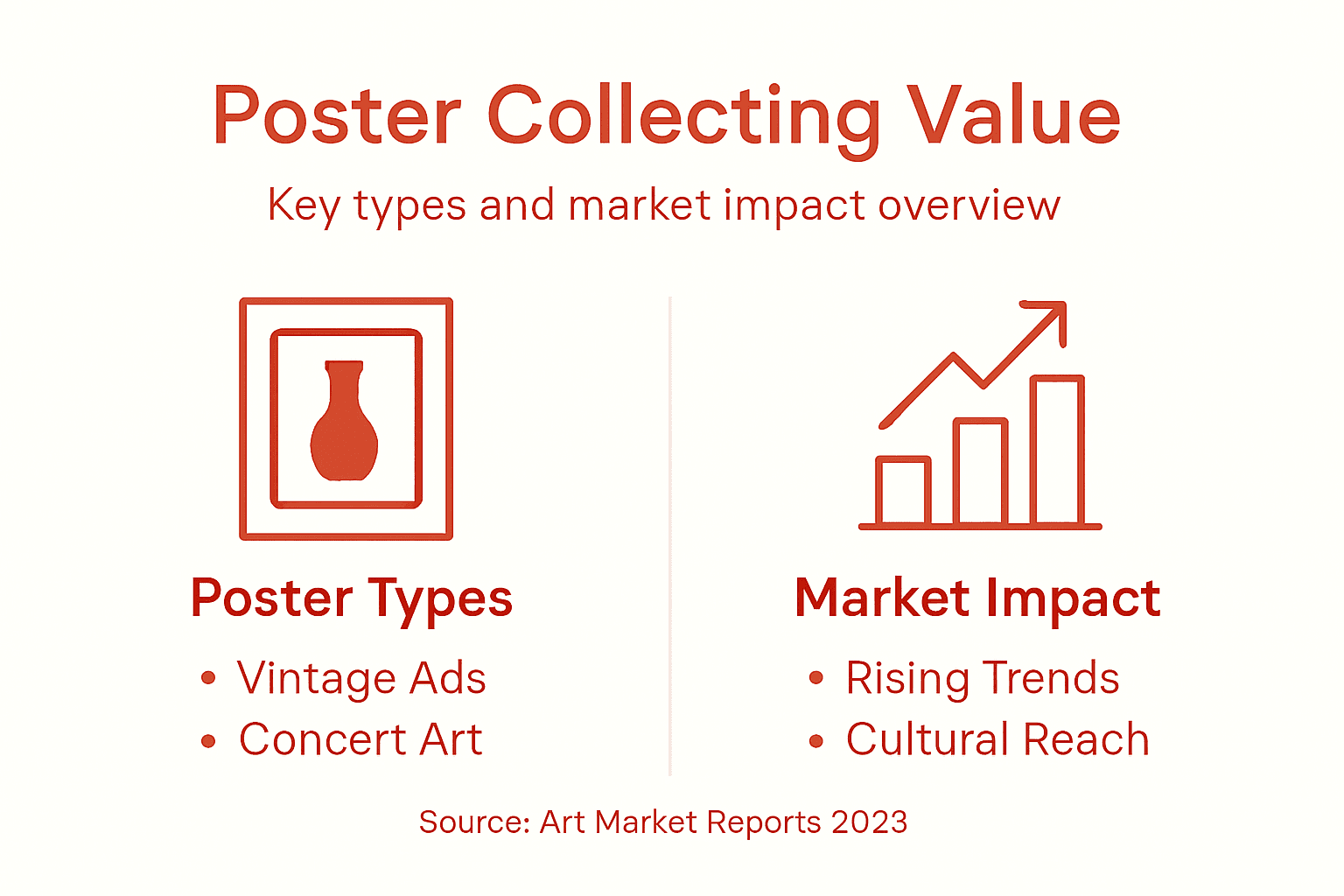
El mercado de los carteles está experimentando un cambio significativo, particularmente entre los coleccionistas más jóvenes.El creciente interés en grabados y carteles entre las generaciones más jóvenes, especialmente la Generación Z, impulsa la creciente demanda del mercado . Este impulso generacional está transformando la forma en que se valoran y coleccionan los carteles. Estás presenciando una transformación en la que los carteles pasan de ser elementos decorativos pasados por alto a piezas de inversión reconocidas. Las plataformas de redes sociales amplifican esta tendencia al hacer que las colecciones de carteles se puedan compartir y descubrir al instante. Una publicación de Instagram que muestre tu pared de galería cuidadosamente seleccionada llega a miles de coleccionistas potenciales en todo el mundo. Esta visibilidad influye en el gusto, crea comunidades en torno a tipos específicos de carteles e impulsa la demanda de piezas raras o infravaloradas. El resultado es un mercado que experimenta un crecimiento genuino, no solo un interés impulsado por la nostalgia. Los coleccionistas adultos jóvenes están tratando los carteles como adquisiciones serias en lugar de compras impulsivas, lo que atrae a vendedores más sofisticados e inventario de mayor calidad.
Comprender la dinámica actual del mercado
El movimiento más dramático del mercado está ocurriendo con los carteles originales de conciertos raros. Las tendencias del mercado de carteles en 2023 sugieren un momento de ruptura para los carteles originales de conciertos raros, infravalorados durante mucho tiempo pero que ahora están ganando una mayor aceptación como activos valiosos . Estas piezas estuvieron en colecciones durante décadas, subestimadas y subvaloradas en comparación con otros objetos de colección. Las ventas de subastas de alto perfil han cambiado esa percepción por completo. Las personas con un alto patrimonio ahora buscan activamente carteles de conciertos de grado de inversión, en particular impresiones de primera tirada de lugares legendarios o bandas icónicas. Esta competencia impulsa los precios al alza, pero también crea oportunidades. Si entras al mercado estratégicamente, puedes adquirir piezas significativas antes de que los precios alcancen los gastos de nivel de museo. El factor de escasez juega a tu favor. Los carteles de conciertos de las décadas de 1960 y 1970 se crearon en cantidades limitadas. Muchos se han dañado, perdido o desechado. Los originales supervivientes se vuelven cada vez más raros, lo que naturalmente apoya la apreciación del valor a largo plazo.
Edificio de Colección Estratégica
Coleccionar con éxito requiere ir más allá de las compras impulsivas. El coleccionismo estratégico implica centrarse en la autenticidad, el estado, la procedencia y la especialización en un nicho para optimizar el valor y la satisfacción. Esto implica desarrollar una filosofía de coleccionismo en lugar de acumular piezas aleatorias. Empieza especializándote en un área específica. Quizás te centres exclusivamente en carteles psicodélicos de conciertos de los años 60. O te centres en láminas de arte contemporáneo de edición limitada de diseñadores específicos. O construye una colección en torno a un artista o banda en particular. Esta especialización crea coherencia, te capacita en tu nicho y te ayuda a identificar piezas infravaloradas que otros coleccionistas pasan por alto.
La procedencia es fundamental. Conocer la historia del póster, sus anteriores propietarios y la documentación refuerza su valor y autenticidad. Los pósteres originales deben incluir información verificable sobre su origen. Su estado influye directamente en el valor de mercado. Un póster con colores brillantes, daños mínimos y materiales originales alcanza precios superiores en comparación con versiones descoloridas o restauradas. Los pósteres de primera tirada y las piezas con país de origen suelen revalorizarse más rápido que las reimpresiones o ediciones posteriores. Al evaluar posibles compras, investigue precios de venta comparables, verifique la autenticidad con expertos y evalúe el estado con honestidad. Crear una colección estratégicamente requiere paciencia y disciplina, pero le recompensará con piezas que realmente aumentan su valor y aportan un auténtico disfrute a su espacio.
Consejo profesional: antes de invertir significativamente, compre algunas piezas asequibles en su especialidad elegida para desarrollar experiencia y confianza, luego avance hacia adquisiciones de mayor valor una vez que comprenda los matices del mercado y los indicadores de calidad.
Evaluación del valor, la autenticidad y los riesgos
La autenticidad separa una inversión que vale la pena de un error costoso. El mercado de los carteles atrae a los falsificadores porque la demanda está en aumento y la verificación requiere experiencia genuina. No puede confiar únicamente en cómo se ve o se siente un cartel. La autenticación real exige una evaluación sistemática. Autenticar impresiones y carteles es fundamental para proteger contra el fraude y preservar el valor . Cuando invierte tiempo en aprender técnicas de autenticación, protege su colección y gana confianza en sus compras. Los coleccionistas astutos desarrollan una lista de verificación que usan constantemente. Verifican los números de edición y los comparan con los registros oficiales. Examinan las firmas de los artistas para verificar la consistencia y las características únicas de la mano de ese artista. Investigan la procedencia del cartel rastreando su historial de propiedad y documentación. Los certificados de autenticidad ayudan, pero requieren un escrutinio en sí mismos. Existe documentación falsificada. Un certificado de una entidad desconocida significa poco. La autenticación legítima proviene de galerías reconocidas, comerciantes establecidos o servicios de tasación de buena reputación con antecedentes verificables.
Examen físico y detalles técnicos
Autenticar carteles de películas antiguas implica examinar la calidad del papel, la textura, los signos de envejecimiento, las técnicas de impresión y los patrones de pliegues . Esta inspección práctica revela detalles que distinguen a los originales de las reproducciones. Los carteles antiguos originales muestran patrones de envejecimiento específicos. El papel desarrolla una pátina particular con el paso de las décadas. Los colores se desvanecen de forma natural de formas distintivas. Los pliegues crean patrones de desgaste genuinos que son casi imposibles de falsificar de forma convincente. La técnica de impresión cuenta una historia. La litografía en piedra produce características visuales diferentes a la impresión offset. Las reproducciones modernas a veces utilizan métodos de impresión que no existían durante la fecha de creación declarada del cartel. Conocer estas distinciones técnicas le proporciona habilidades detectivescas que a los falsificadores les cuesta superar. Las marcas del editor, la información de la impresora y las marcas de registro proporcionan pistas de autenticación. Cuando examina un cartel con una lupa, observa patrones de puntos de impresión consistentes con la tecnología específica de la época. Las reproducciones de alta calidad intentan replicar estos detalles, pero las inconsistencias surgen tras un escrutinio cuidadoso.
Compare estos factores clave al evaluar un póster antes de comprarlo:
| Factor | Qué examinar | Impacto en el valor |
|---|---|---|
| Autenticidad | Procedencia, edición, firmas | Esencial para la inversión |
| Condición | Calidad del color, daños, reparaciones. | Las buenas condiciones traen los mejores precios |
| Método de impresión | Litografía vs. offset vs. digital | Determina la edad y la rareza. |
| Demanda del mercado | Ventas recientes, tendencias de coleccionistas | Impulsa el movimiento de precios |
Evaluación del valor de mercado y el riesgo
La evaluación del valor requiere comprender tanto los factores intrínsecos como la demanda del mercado. Un póster puede ser genuinamente antiguo, perfectamente auténtico y con un diseño hermoso, y aun así tener un valor modesto si la demanda se mantiene baja. Por el contrario, una impresión contemporánea de edición limitada de un artista de moda puede alcanzar precios altos a pesar de su mínima relevancia histórica. Investigue ventas comparables examinando los resultados de subastas, listados de galerías y foros de coleccionistas. Observe el precio real de venta de pósteres similares, no los precios de venta. A menudo hay una diferencia sustancial entre lo que los vendedores esperan recibir y lo que los compradores realmente pagan. La rareza, combinada con la demanda, impulsa el valor. Un póster raro que represente una película desconocida de los años 50 puede ser auténtico y estar bellamente elaborado, pero el escaso interés de los coleccionistas mantiene los precios bajos. Un póster del concierto de una banda legendaria en un recinto importante con significado cultural alcanza un precio elevado. El estado de conservación impacta drásticamente el valor. Incluso un daño menor reduce el precio significativamente. La conservación profesional puede ayudar, pero también cuesta dinero y, a veces, deja rastros que alertan a los coleccionistas experimentados.
Existen riesgos en todos los niveles de precio. Comprar a vendedores online desconocidos conlleva un mayor riesgo de autenticación. Comprar en galerías consolidadas o comerciantes de renombre ofrece mayor protección, aunque a precios elevados. Nunca se apresure en compras importantes. Solicite fotografías detalladas desde varios ángulos. Haga preguntas específicas sobre la autenticación y evalúe los conocimientos y la transparencia del vendedor. Si algo le resulta incierto, desista. Siempre habrá alguien más. Su colección crece mejor mediante la adquisición selectiva que mediante compras impulsivas y lamentables por miedo a perderse algo.
Consejo profesional: antes de comprar cualquier póster que supere su nivel de precio habitual, solicite una evaluación de autenticación profesional o consulte con coleccionistas experimentados en comunidades especializadas que puedan evaluar la pieza y la credibilidad del vendedor.
Descubra el poder de los carteles en su estilo cotidiano
El artículo destaca cómo los carteles son más que simples obras de arte; son vibrantes narradores de cultura, historia y movimiento que conectan profundamente con coleccionistas y aficionados. Si te atrae el impacto único y el valor cultural de los carteles que se describen aquí y quieres expresar esa pasión más allá de tu colección, encuentra prendas exclusivas inspiradas en el arte y carteles coleccionables diseñados para conectarte con esas mismas expresiones artísticas. Desde diseños influenciados por artistas icónicos como Picasso y Banksy hasta láminas que evocan grandes movimientos artísticos, nuestra selección te ayuda a llevar el arte y la historia que amas.

Mejora tu estilo personal mientras celebras las bellas artes y la cultura popular. Explora nuestras colecciones de camisetas, sudaderas, chanclas y pósteres artísticos en ArtoramaShop . Siéntete orgulloso de tener productos exclusivos de alta calidad que conectan la cultura del póster coleccionable con la moda cotidiana. Empieza a crear tu estilo distintivo hoy mismo y lleva el mismo poder narrativo de los pósteres a tu armario y hogar.
Preguntas frecuentes
¿Qué tipos de carteles son más valiosos para los coleccionistas?
Los carteles publicitarios antiguos, los carteles de películas icónicas, los carteles de conciertos, los carteles de propaganda y los carteles de arte contemporáneo son piezas muy apreciadas por los coleccionistas. Su rareza y relevancia histórica suelen determinar su valor de mercado.
¿Cómo empiezo a construir una colección de carteles?
Empieza por identificar las categorías de carteles que realmente te apasionan, como los carteles antiguos de películas o conciertos. Investiga artistas, periodos históricos y movimientos de diseño específicos dentro de las categorías elegidas para desarrollar la experiencia necesaria para un coleccionismo meticuloso.
¿Qué diferencia a los carteles de otras formas de arte?
Los carteles son únicos porque fueron diseñados para la comunicación masiva, no para la exhibición exclusiva. Su impactante diseño visual y su accesibilidad les permiten capturar momentos culturales, convirtiéndolos en documentos históricos significativos, además de expresiones artísticas.
¿Cómo puedo evaluar la autenticidad y el valor de un cartel?
Para evaluar la autenticidad, examine la procedencia, los números de edición y el estado del póster. Investigue las ventas recientes y compare pósteres similares para comprender su valor de mercado. Preste atención a los detalles técnicos, como los métodos de impresión y las señales de envejecimiento propias de los originales.

