

Why Collect Pop Culture Art: Personal and Social Impact
Jan 26, 2026
Pop culture art sparks debate like few other creative movements. Some see it as nothing more than commercial graphics or mass-produced posters, missing the deeper story. For young collectors who crave self-expression, pop culture art stands out as a vibrant fusion of accessibility and artistic intent. Discover how this dynamic category challenges old assumptions and unlocks fresh ways to connect with global trends, personal identity, and creative storytelling.
Table of Contents
- Defining Pop Culture Art And Common Misconceptions
- Major Categories And Iconic Examples
- Core Motivations For Collecting Pop Art
- Investment Potential And Value Trends
- Legal, Ethical, And Authenticity Concerns
- Risks, Missteps, And Smart Collecting Practices
Key Takeaways
| Point | Details |
|---|---|
| Understanding Pop Culture Art | Pop culture art is a nuanced form of expression, challenging misconceptions about its lack of intellectual depth and artistic merit. |
| Core Motivations for Collecting | Collecting pop culture art satisfies deep-seated psychological needs for self-expression, community belonging, and emotional connection. |
| Investment Potential | Many pop culture pieces appreciate in value over time, with factors like rarity and artist reputation playing key roles in their marketability. |
| Smart Collecting Practices | Define a clear focus for your collection to avoid impulsive purchases, making it meaningful and aligned with your personal values. |
Defining Pop Culture Art and Common Misconceptions
Pop culture art isn’t what most people think it is. Many assume it means cheap, mass-produced imagery or purely commercial designs with zero artistic merit. That’s one of the biggest misconceptions holding people back from collecting it seriously. The reality is far more nuanced and rewarding.
Pop culture itself emerged as a powerful creative force in the early 20th century, particularly in the United States, where it functioned as a cultural rebellion against rigid social traditions. Young people embraced new forms of expression through radio, cinema, and visual media, fundamentally reshaping what counted as art. This wasn’t accident. It was deliberate pushback against the gatekeepers who decided what deserved to hang in galleries.
Today, pop culture art represents the intersection of accessibility and creative brilliance. Think of it as art that speaks to contemporary audiences through recognizable imagery, cultural references, and visual language everyone understands. It includes everything from reinterpretations of iconic paintings by legendary artists to street art that comments on current events. The key difference? Pop culture art intentionally engages with the world around us rather than existing in isolation.
One major misconception suggests that pop culture art lacks intellectual depth. Wrong. Understanding popular culture requires recognizing cultural capital and institutional theory, which means it operates on sophisticated conceptual levels. Artists working in this space make deliberate choices about symbolism, composition, and meaning. They’re not just grabbing random images; they’re critiquing consumer culture, exploring identity, and pushing boundaries.
Another false belief treats pop culture art as temporary or disposable. Collectors often worry these pieces will become outdated or lose value. However, pop culture artifacts from past decades now command serious respect and prices. A band t-shirt design from the 1990s isn’t less valuable because it references a specific moment in time; that specificity is exactly what makes it historically significant and artistically compelling.
The final misconception worth addressing involves collecting authenticity. Some assume pop culture art purchases must come from questionable sources or lack legitimacy. Quality platforms offering artist-inspired merchandise with high-resolution printing and exclusive designs prove this wrong. You can acquire meaningful pop culture art pieces through reputable sellers without compromising on quality or artistic integrity.
Pro tip: When evaluating pop culture art, ask yourself whether it sparks genuine emotional response or makes you think differently about a subject. If it does, it’s worth collecting regardless of whether traditional art institutions validate it.
Major Categories and Iconic Examples
Pop Art stands as the foundational category that shaped how we think about art and commerce together. Emerging in the 1950s and early 1960s, Pop Art deliberately grabbed imagery from advertising, comic books, and mass media to challenge what traditional galleries considered worthy of exhibition. Artists like Andy Warhol and Roy Lichtenstein transformed mundane consumer products into monumental statements. Campbell Soup Cans became philosophical questions about mass production and authenticity.
What made Pop Art revolutionary was its technical approach. Artists employed mechanical reproduction, vivid primary colors, and commercial printing techniques to democratize art. They weren’t hiding their sources; they were celebrating them. This category proved that high art and popular culture weren’t enemies but natural collaborators.
Street Art and Graffiti represents another major category that commands serious collector attention today. This category emerged from urban landscapes and challenged the gallery system entirely. Artists painted directly onto public spaces, reaching audiences who never stepped into museums. The raw energy and political messaging of street art resonated with younger collectors seeking authenticity and social commentary.
Contemporary Pop Culture Iconography encompasses modern interpretations of celebrity, meme culture, and internet phenomena. This category evolves constantly as new cultural moments emerge. Digital artists and traditional painters both explore how influencers, viral moments, and entertainment figures shape identity. Think of it as Pop Art’s direct descendant in the social media age.
Comic Book and Animation Art forms a distinct category celebrating sequential storytelling and character design. This includes original comic panels, animation cels, and reinterpretations of beloved characters. The category acknowledges that narrative art and visual storytelling deserve the same respect as static paintings.
Band and Music Merchandise Art deserves special mention as its own category. Album covers, concert posters, and band-inspired artwork carry cultural weight and historical significance. A 1970s rock poster functions as both artistic expression and documentary evidence of a specific moment in music history.
The beauty of these categories lies in their diversity. Pop art fundamentally blurred boundaries between high and low culture by incorporating commercial imagery alongside fine art traditions. This democratization continues today, making collecting more accessible while maintaining artistic integrity.
Here’s a snapshot of major categories of pop culture art and their defining traits:
| Category | Main Inspiration | Typical Mediums | Collector Appeal |
|---|---|---|---|
| Pop Art | Advertising, mass media | Prints, paintings | Iconic, accessible imagery |
| Street Art & Graffiti | Urban environments, activism | Murals, spray paint | Social commentary, raw style |
| Contemporary Iconography | Celebrities, internet culture | Digital, mixed media | Up-to-date, viral themes |
| Comic Book & Animation Art | Character design, narrative | Panels, animation cels | Nostalgia, visual stories |
| Band & Music Merchandise Art | Music history, performances | Posters, album covers | Time-capsule, fandom pride |
Pro tip: Start your collection by focusing on one category that genuinely excites you, whether it’s classic Pop Art, street art, or contemporary icons, then expand into adjacent categories as your eye develops.
Core Motivations for Collecting Pop Art
Why do people collect pop culture art? The answer goes deeper than just liking how something looks. Art collecting fulfills psychological, cultural, and biological desires including self-expression, identity affirmation, and emotional connection. Your collection becomes a mirror reflecting who you are and what you value. It’s not frivolous; it’s fundamental to how humans make meaning.
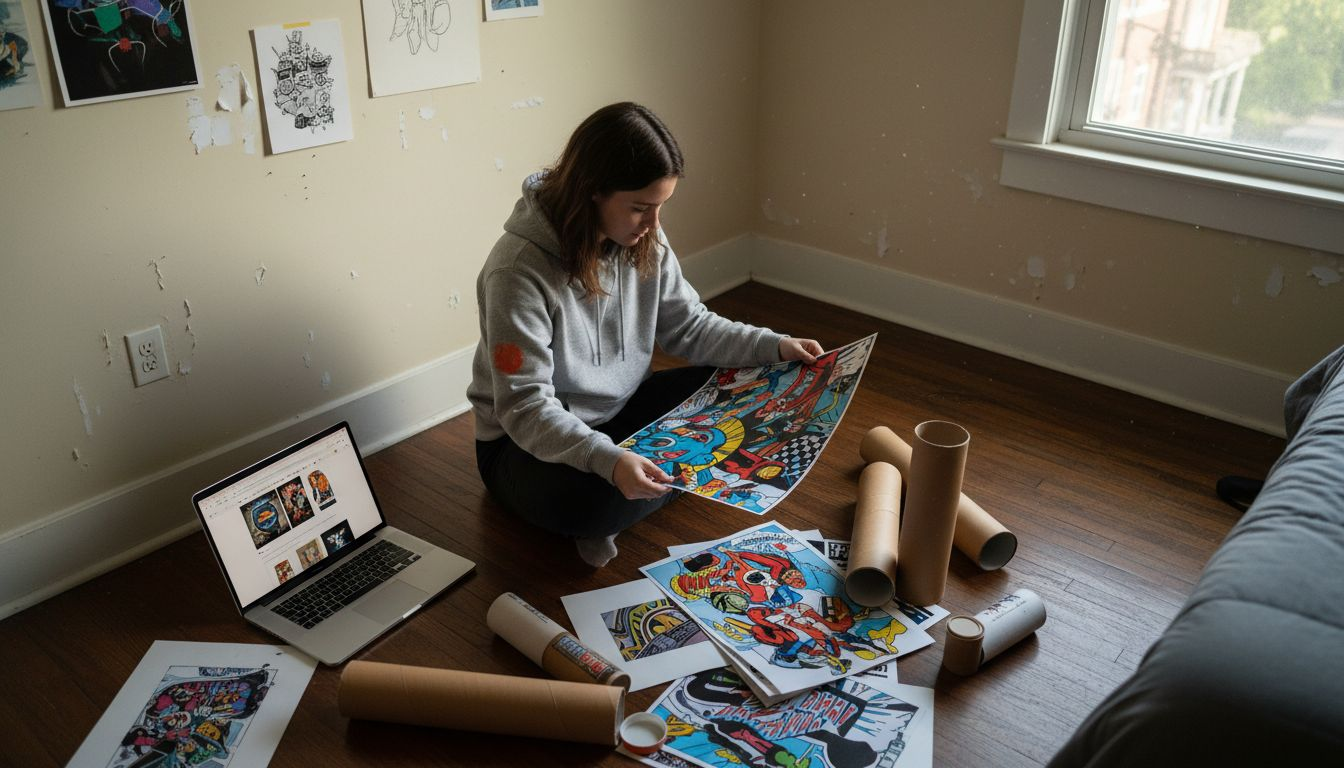
Self-expression tops the list of core motivations. You curate pieces that resonate with your personality, beliefs, and experiences. A vintage band poster isn’t just decoration; it’s a statement about your musical taste and era of influence. Pop culture art lets you communicate your identity without saying a word. When friends visit, your walls tell your story.
Emotional connection forms another powerful motivator. Many collectors start because a specific piece moved them or triggered a memory. Maybe a Banksy print reminds you of traveling through London. Perhaps a Matisse-inspired design connects to your grandmother’s favorite colors. These emotional anchors transform a purchase into a meaningful possession with personal significance.
Social identity plays a crucial role in collecting behavior. Collecting serves as an identity expression and social engagement practice, influenced initially by family and personal interest, then expanding through friends, partners, and social media. Your collection communicates cultural engagement and sophistication. It signals that you appreciate artistic expression and visual storytelling.
Community belonging motivates collectors too. Sharing collections online, attending exhibitions, and discussing pieces with fellow enthusiasts creates genuine connections. You’re not collecting in isolation; you’re joining a global conversation about art, culture, and what matters. Discovering that someone on the other side of the world loves the same artist you do creates unexpected kinship.
Investment potential matters for some collectors. Pop culture art from decades past has appreciated significantly. Knowing your collection might gain value adds psychological satisfaction, though true collectors prioritize passion over profit. Learning about Roy Lichtenstein’s artistic evolution and impact helps collectors understand why certain pieces command respect and grow in value over time.
Pro tip: Start collecting from genuine emotional resonance rather than chasing trends or investment potential; pieces you truly love will always bring satisfaction regardless of market value.
Investment Potential and Value Trends
Pop culture art isn’t just emotionally rewarding; it can also appreciate in value over time. The global collectibles market is growing steadily with a projected 6.6% compound annual growth rate through 2033. Art and antiques form the largest category within this market, with strong appreciation potential driving serious collector interest. This growth reflects genuine market dynamics, not speculation.
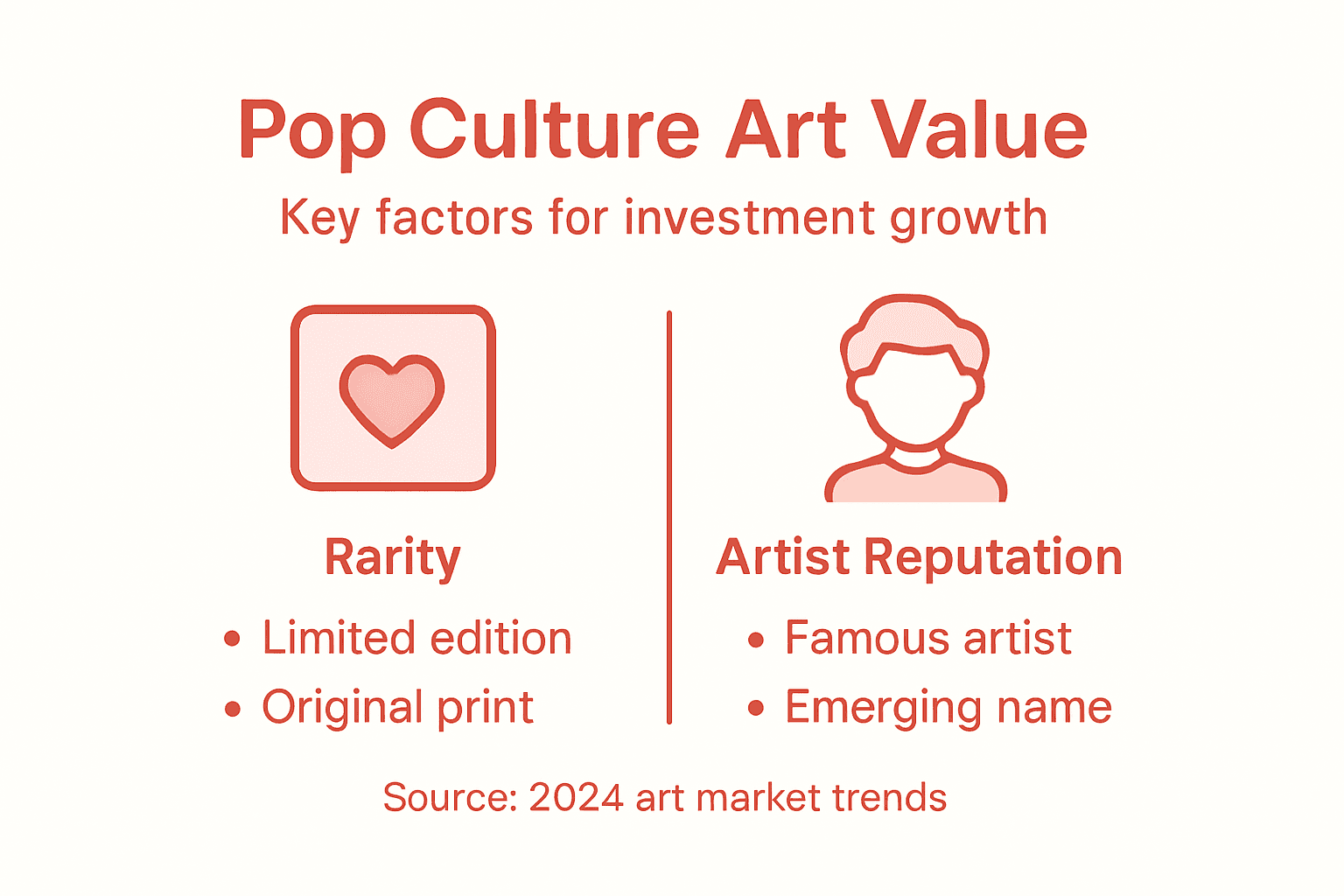
What drives value appreciation in pop culture art? Rarity matters tremendously. Limited edition prints, original artwork, and pieces from discontinued collections command higher prices as supply shrinks. A t-shirt design from a limited run of 500 units holds different value than mass-produced merchandise. Scarcity creates demand naturally.
Artist reputation significantly influences pricing trends. Work by established artists like Banksy, Picasso reinterpretations, or beloved contemporary creators holds and gains value more reliably. As an artist’s career progresses and recognition grows, their earlier work becomes increasingly sought after. Collectors who recognized talent early often find their pieces appreciate substantially.
Condition and provenance affect value directly. Original condition pieces command premium prices compared to worn or damaged versions. Documentation showing where a piece came from and who owned it matters considerably. High-resolution printing quality and authentic materials make pieces more durable and desirable long term.
The 2024 art market shows strong growth driven by emerging collectors and digital transformation, with younger buyers purchasing earlier and more frequently than previous generations. This demographic shift increases demand for contemporary pop culture art specifically. Market transparency has improved, making it easier to track pricing trends and understand value drivers.
Not all pop culture art appreciates equally. Category matters significantly. Vintage comic book art, classic album covers, and authenticated street art prints tend to appreciate more reliably than mass-produced posters. Investment potential varies based on artist prominence, rarity, condition, and cultural significance. Research specific artists and categories before expecting appreciation.
Timing influences value too. Pieces connected to cultural moments or celebrating artists at career peaks often appreciate faster. A limited edition design celebrating a musician’s milestone tour might gain value as that tour becomes historically significant. Collections built thoughtfully often outperform casual acquisitions.
Compare the main factors influencing pop culture art’s investment potential:
| Factor | Description | Collector Impact |
|---|---|---|
| Rarity | Limited editions are more valuable | Drives demand and price |
| Artist | Reputation boosts long-term appreciation | Established names matter |
| Condition | Mint and well-documented art holds value | Higher resale and prestige |
| Timing | Links to cultural moments can raise value | Market trends accelerate |
| Category | Some types appreciate faster than others | Research guides strategy |
Pro tip: Focus on acquiring pieces from artists whose work aligns with your genuine passion, as authentic collecting driven by love typically yields better long-term value appreciation than purely speculative purchases.
Legal, Ethical, and Authenticity Concerns
Collecting pop culture art comes with real responsibilities that go beyond personal enjoyment. Authenticity matters legally and ethically. Forged artwork, stolen pieces, and counterfeit merchandise circulate through the market constantly. Understanding these risks protects you, supports legitimate artists, and preserves cultural heritage.
Authentication challenges plague the art world significantly. Provenance records and document falsification enable stolen or forged art to enter markets, creating serious problems for unsuspecting collectors. A beautiful piece might carry a dark history you never discover. Incomplete documentation, missing certificates of authenticity, and vague seller information should raise immediate red flags.
Provenance verification is your first defense. Always ask sellers for complete documentation showing where pieces originated and who owned them previously. Legitimate dealers maintain detailed records and transparently share this information. If a seller hesitates or provides vague answers, walk away. Legitimate transactions have nothing to hide.
Cultural appropriation and looting represent ethical concerns beyond forgery. Some artworks were stolen from their countries of origin or represent culturally significant items removed without permission. Ethical collecting demands thorough due diligence including verification of provenance to ensure artworks are not stolen or looted, with respect for cultural significance guiding your decisions. Supporting repatriation when appropriate demonstrates genuine commitment to ethical collecting.
Copyright and licensing issues affect contemporary pop culture art particularly. Digital artists and independent creators often struggle with unauthorized reproductions. When you purchase art, verify the seller holds proper licenses and rights to sell it. Supporting artists directly through legitimate channels strengthens the entire creative ecosystem.
Reputable sellers invest in emerging authentication technologies like blockchain verification, detailed certificates of authenticity, and transparent sourcing documentation. These sellers understand that trust is their most valuable asset. They voluntarily provide information that protects buyers and demonstrates confidence in their merchandise quality.
Pro tip: Always purchase from established sellers with clear return policies, certificate of authenticity options, and transparent sourcing information; when in doubt about a piece’s legitimacy, pass on it and find another collector who will appreciate your due diligence.
Risks, Missteps, and Smart Collecting Practices
Not all collecting habits lead to meaningful collections. Many people accumulate pieces impulsively, then regret their purchases or find themselves drowning in clutter. Understanding common missteps helps you build a collection that genuinely enriches your life rather than drains your wallet and space.
Impulse buying represents the biggest risk most collectors face. You see something cool, feel an emotional rush, and purchase immediately without considering whether it actually fits your collection or values. This leads to wasted money and shelves filled with pieces you barely notice. Pause before purchasing. Ask yourself if you would display this piece prominently or if it will disappear into storage.
Buying without clear direction creates collections lacking cohesion. Without defining what you collect and why, you end up with random pieces that don’t speak to each other. Thoughtful curation requires understanding the cultural and epistemic value of collections to avoid missteps. A focused collection celebrating a specific artist, era, or theme feels intentional and meaningful.
Overspending and compulsive behavior can transform collecting from enjoyable into destructive. Collectors must navigate economic and psychological aspects mindfully to avoid compulsive behavior or poor investment decisions, emphasizing informed, responsible collecting practices. Set a realistic budget before collecting and stick to it. Track your spending honestly.
Storage and display limitations often catch collectors off guard. Physical space matters. Overcrowding pieces diminishes their visual impact and can damage them through poor conditions. Start small and only expand when you have proper space to display and preserve pieces beautifully.
Smart collecting practices change everything. Start by defining your focus. What genuinely excites you? Build slowly around that passion rather than chasing trends. Research artists and pieces thoroughly before investing. Seek education about your chosen category through books, exhibitions, and collector communities.
Document your collection meticulously. Keep receipts, photographs, and condition notes for each piece. This documentation protects you legally, helps with insurance claims, and demonstrates serious collecting commitment. Proper record-keeping transforms a personal collection into something with real value.
Connect with other collectors and communities. They offer invaluable perspective, market insights, and emotional support. Online forums and local exhibitions help you learn faster and avoid beginner mistakes that others have already made.
Pro tip: Create a written collecting mission statement that describes what you collect, why it matters to you, and what boundaries you set, then reference this statement whenever you consider a new purchase to ensure alignment with your values.
Discover Authentic Pop Culture Art Merchandise with Meaning and Impact
Collecting pop culture art is more than acquiring items. It is about expressing your identity, connecting with a community, and owning pieces that spark emotion and thoughtful reflection. If you want to avoid impulse purchases and build a collection that truly resonates with your values the key is to choose high-quality, artist-inspired merchandise that celebrates creativity and cultural significance.
Artoramashop.com offers a curated selection of exclusive apparel and collectible art-themed items designed to help you showcase your passion for iconic artists like Picasso, Banksy, and Matisse. Whether you are drawn to thought-provoking street art or classic Pop Art styles you can find graphic t-shirts, hoodies, posters, and mugs crafted with high-resolution printing and artistic integrity.
Explore our collection today and start expressing your unique story with styles that go beyond trends and mass production.
Browse exclusive pop culture designs now.
Frequently Asked Questions
What is pop culture art?
Pop culture art is a form of art that engages with contemporary themes, cultural references, and recognizable imagery. It blends creative brilliance with accessibility, often using icons from advertising, music, and social media to resonate with a modern audience.
Why should I start collecting pop culture art?
Collecting pop culture art allows for personal expression and can reflect your identity, beliefs, and experiences. It also fosters an emotional connection and can serve as a meaningful, culturally significant collection that brings joy and insight into your world.
How can pop culture art appreciate in value over time?
The value of pop culture art can appreciate due to factors like rarity, artist reputation, condition, and provenance. Limited editions and works by established artists are particularly likely to see value increases as they become coveted by collectors.
What should I consider when evaluating the authenticity of pop culture art?
When evaluating authenticity, always request provenance documentation showing the piece’s origin and ownership history. Look for certificates of authenticity and ensure the seller can provide clear and legitimate information to avoid the risks of counterfeit art.
Recommended
- How Artists are Reacting to life with COVID-19 – Art-O-Rama Shop
- How Artists are Reacting to life with COVID-19 – Art-O-Rama Shop
- How Artists are Reacting to life with COVID-19 – Art-O-Rama Shop
- How Artists are Reacting to life with COVID-19 – Art-O-Rama Shop
- How to Start a Tee Collection for Pop Culture Fans – ChillStitchApparel
- 9 Essential Japanese Plush Collectibles for 2026 – MOMORO & Friends

