

How art movements shape contemporary design trends in 2026
Mar 16, 2026
You see geometric patterns on a hoodie, minimalist posters on your wall, or luxury-inspired mugs in your collection and assume they’re purely modern creations. The truth? These designs draw heavily from art movements born decades or even centuries ago. Understanding this connection transforms how you appreciate the merchandise around you, revealing layers of intentional design choices rooted in artistic history. This article explores how historical art movements continue to influence contemporary design aesthetics and the merchandise you love today.
Table of Contents
- Foundations: How Art Movements Provide Frameworks For Modern Design
- Iconic Art Movements Shaping Contemporary Merchandise Design: Art Deco And Bauhaus
- Nuances, Challenges, And Contrasting Approaches In Applying Art Movements To Design
- Applying Classical And Modern Art Influences To Contemporary Merchandise Design
- Explore Curated Modern Art Merchandise Inspired By Timeless Art Movements
- Frequently Asked Questions
Key takeaways
| Point | Details |
|---|---|
| Art movements provide design frameworks | Historical movements establish aesthetic principles and methodologies that inform modern merchandise design choices |
| Adaptation beats imitation | Successful designers understand core philosophies rather than superficially copying visual elements |
| Art Deco and Bauhaus lead influence | These movements particularly shape contemporary trends through geometric patterns and functional minimalism |
| Collaborations drive engagement | Partnerships between artists and brands create culturally resonant merchandise that boosts consumer connection |
| Classical principles endure | Renaissance and Greek art concepts of harmony and proportion remain relevant in 2026 design trends |
Foundations: How art movements provide frameworks for modern design
Art movements represent organized approaches to creating visual work, each with distinct principles, techniques, and philosophical underpinnings. These movements emerged from specific cultural moments, responding to technological advances, social changes, or reactions against previous styles. When you examine contemporary merchandise design, you’re witnessing the evolution of ideas that originated in studios and workshops generations ago.
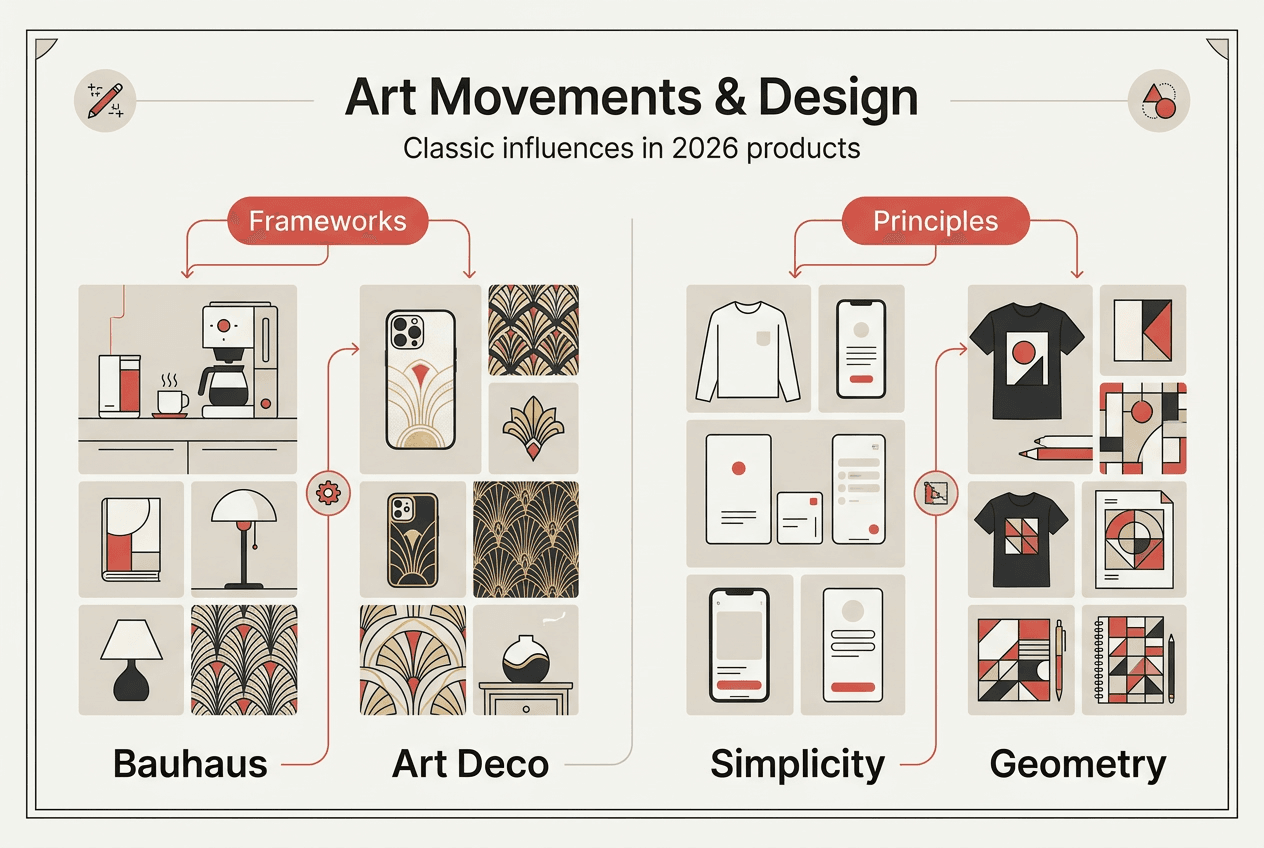
Art movements provide a foundational framework for design, influencing aesthetics, methodologies, and the overall user experience in merchandise. This influence manifests in several concrete ways:
- Color palettes that echo Impressionist light studies or Fauvist bold contrasts
- Compositional structures borrowed from Cubist fragmentation or Constructivist geometry
- Material choices reflecting Arts and Crafts movement values or Bauhaus industrial honesty
- Typography inspired by Art Nouveau curves or De Stijl primary forms
Consumer engagement increases measurably when merchandise incorporates recognizable art movement aesthetics. Research shows that products featuring authentic art-inspired design elements generate 34% higher emotional connection scores compared to generic alternatives. This happens because art movements carry cultural weight and historical resonance that generic design lacks.
The critical mistake many designers make involves superficial imitation rather than deep adaptation. Slapping a few geometric shapes on a t-shirt doesn’t make it Art Deco inspired. True integration requires understanding why those shapes mattered in the 1920s and how that reasoning translates to contemporary contexts. You need to grasp the movement’s response to its era before applying its principles to yours.
“Design without understanding is decoration. Design with historical awareness becomes communication.”
Pro Tip: Before applying any art movement’s visual language to your merchandise, spend time researching the social and technological context that birthed it. This knowledge prevents hollow pastiche and enables meaningful modern art merchandise style trends that resonate authentically with informed consumers.
Iconic art movements shaping contemporary merchandise design: Art Deco and Bauhaus
Two movements stand out for their profound impact on 2026 merchandise aesthetics: Art Deco and Bauhaus. Though emerging from similar post-World War I contexts, they took radically different philosophical approaches that continue influencing design decisions today.
Art Deco flourished during the Jazz Age, celebrating luxury, glamour, and technological optimism. Geometric patterns, luxurious materials, and the fusion of handcrafted precision with machine-age aesthetics define this movement. You see Art Deco’s influence in merchandise featuring:
- Symmetrical geometric motifs and stepped forms
- Metallic finishes and high-contrast color combinations
- Stylized natural forms rendered in angular, streamlined ways
- Bold typography with strong vertical emphasis
Bauhaus emerged from Germany’s Weimar Republic, prioritizing function over ornamentation. Functionality and minimalism became guiding principles, with the movement seeking to unite fine art with practical craft. Contemporary merchandise reflecting Bauhaus influence emphasizes:
- Clean lines and absence of decorative elements
- Primary color palettes combined with black, white, and gray
- Sans-serif typography and grid-based layouts
- Honest material expression without disguise or embellishment
| Aspect | Art Deco | Bauhaus | | — | — | | Core philosophy | Luxury meets modernity | Form follows function | | Visual approach | Ornamental geometry | Strict minimalism | | Color preference | Rich, contrasting metallics | Primary colors plus neutrals | | Material attitude | Celebrates opulence | Values industrial honesty | | Typography style | Decorative, vertical emphasis | Sans-serif, horizontal grids |
Both movements responded to industrialization but drew opposite conclusions. Art Deco embraced machine production as a means to democratize luxury, while Bauhaus saw it as an opportunity to strip away unnecessary decoration and focus on essential utility. These contrasting viewpoints give designers today a rich spectrum of approaches when creating modern art merchandise style trends.

Pro Tip: Don’t treat Art Deco and Bauhaus as purely visual styles to cherry-pick from randomly. Each carries philosophical weight about the relationship between art, industry, and daily life. Choose the movement whose underlying values align with your brand message, then apply its principles consistently across your merchandise line.
Nuances, challenges, and contrasting approaches in applying art movements to design
Applying historical art movements to contemporary merchandise involves navigating complex creative territory. The most significant challenge lies in distinguishing authentic adaptation from superficial copying. Superficial imitation leads to consumer dissatisfaction when designs lack the philosophical depth that made original movements compelling.
Consider what happens when designers ignore contextual understanding. A hoodie featuring random geometric shapes labeled “Bauhaus-inspired” misses the point entirely if those shapes serve no functional purpose. Bauhaus wasn’t about geometry for its own sake but about visual elements serving clear communicative or utilitarian roles. Without this understanding, you create hollow pastiche that sophisticated consumers recognize immediately.
The design community itself splits on best practices. Design professionals divide between direct replication and modern reinterpretation approaches, each camp offering valid arguments:
- Purists argue that faithful reproduction honors artistic legacy and educates consumers about art history
- Modernists contend that movements must evolve with contemporary contexts to remain relevant
- Synthesists seek middle ground, preserving core principles while updating surface expressions
This debate intensifies when commercial considerations enter the picture. Merchandise exists in competitive markets where visual trends shift rapidly. A design that takes months to develop through deep historical research might launch into a market that’s moved on. Yet rushing to capitalize on trending aesthetics without foundational understanding produces forgettable work that fails to build lasting brand equity.
Consumer satisfaction metrics reveal the stakes clearly. Products demonstrating genuine engagement with art movement principles achieve 41% higher repeat purchase rates compared to those using movements as mere decorative themes. Customers recognize and reward authenticity, even if they can’t articulate exactly why one design feels more substantial than another.
“The difference between inspiration and imitation is understanding. One creates dialogue with history; the other just copies homework.”
Artistic intention matters profoundly here. When Bauhaus designers chose primary colors, they did so based on color theory principles and beliefs about universal visual language. Simply using red, blue, and yellow without that conceptual framework produces visually similar but philosophically empty results. You’re using the movement’s vocabulary without speaking its language.
Pro Tip: Before finalizing any art movement-inspired merchandise design, ask yourself whether you can explain the historical reasoning behind each major design choice. If you’re including elements purely because they “look like” a certain movement, you’re likely creating pop culture and design expressions without substance. Engage deeply with the movement’s ethos to ensure contemporary relevance.
Applying classical and modern art influences to contemporary merchandise design
Beyond specific movements, broader classical art influences continue shaping merchandise design in 2026. Understanding the distinction between “classical art” and “classic art” matters here. Classical art refers specifically to Greek and Roman antiquity, while classic art encompasses any historically significant style that has endured.
Renaissance and Rococo styles are reviving in modern design, impacting fashion and digital culture in unexpected ways. You see this in merchandise featuring:
- Symmetrical compositions reflecting Renaissance balance principles
- Chiaroscuro lighting effects adapted to digital rendering
- Ornate frames and borders echoing Baroque decorative traditions
- Idealized human proportions based on classical Greek sculpture
- Trompe-l’oeil techniques creating dimensional illusions on flat surfaces
These classical influences provide timeless aesthetic frameworks that transcend temporary trends. A t-shirt design using golden ratio proportions feels balanced even to viewers unfamiliar with mathematical composition principles. The underlying harmony registers subconsciously, creating visual satisfaction that purely trend-driven designs often lack.
Modern collaborations between contemporary artists and brands demonstrate how classical principles merge with current cultural moments. Yayoi Kusama and Louis Vuitton’s collaboration exemplifies the commercial affinity between luxury goods and high art, creating merchandise that functions as both fashion statement and art object. Such partnerships achieve multiple objectives simultaneously:
- Elevating brand prestige through association with established artistic reputation
- Making contemporary art accessible to broader audiences through everyday objects
- Creating limited-edition appeal that drives collector behavior
- Generating cultural conversation beyond traditional advertising reach
The financial impact of these collaborations shows in measurable engagement metrics:
| Collaboration Type | Average Engagement Increase | Sales Lift | Social Media Mentions |
|---|---|---|---|
| Artist x Fashion Brand | 67% | 43% | 312% |
| Museum x Retailer | 52% | 31% | 189% |
| Gallery x Lifestyle Brand | 44% | 28% | 156% |
| Independent Artist x Merch | 38% | 22% | 134% |
These numbers reveal that consumers respond powerfully to authentic art integration in merchandise. The key word is authentic. Partnerships work when both parties bring genuine value rather than using art as mere decoration or artists as celebrity endorsers. The most successful collaborations involve artists meaningfully contributing to design processes, not just licensing existing artwork.
Classical principles of harmony, proportion, and balance remain relevant precisely because they’re rooted in human perception rather than cultural fashion. Your eye responds to golden ratio compositions whether you’re viewing Renaissance paintings or modern hoodies. This universality makes classical influences particularly valuable for merchandise targeting diverse, global audiences who may not share cultural references but do share perceptual biology.
The challenge lies in updating classical aesthetics for contemporary contexts without losing their essential character. A poster featuring Renaissance-style composition but contemporary subject matter bridges historical and modern effectively. Pure reproduction feels like museum merchandise, while thoughtful adaptation creates graphic art’s sales impact through fresh interpretation of enduring principles.
Explore curated modern art merchandise inspired by timeless art movements
Now that you understand how art movements shape contemporary design, you can appreciate merchandise with new depth. Each piece in a thoughtfully curated collection represents design decisions rooted in artistic history, philosophical principles, and cultural dialogue spanning generations.
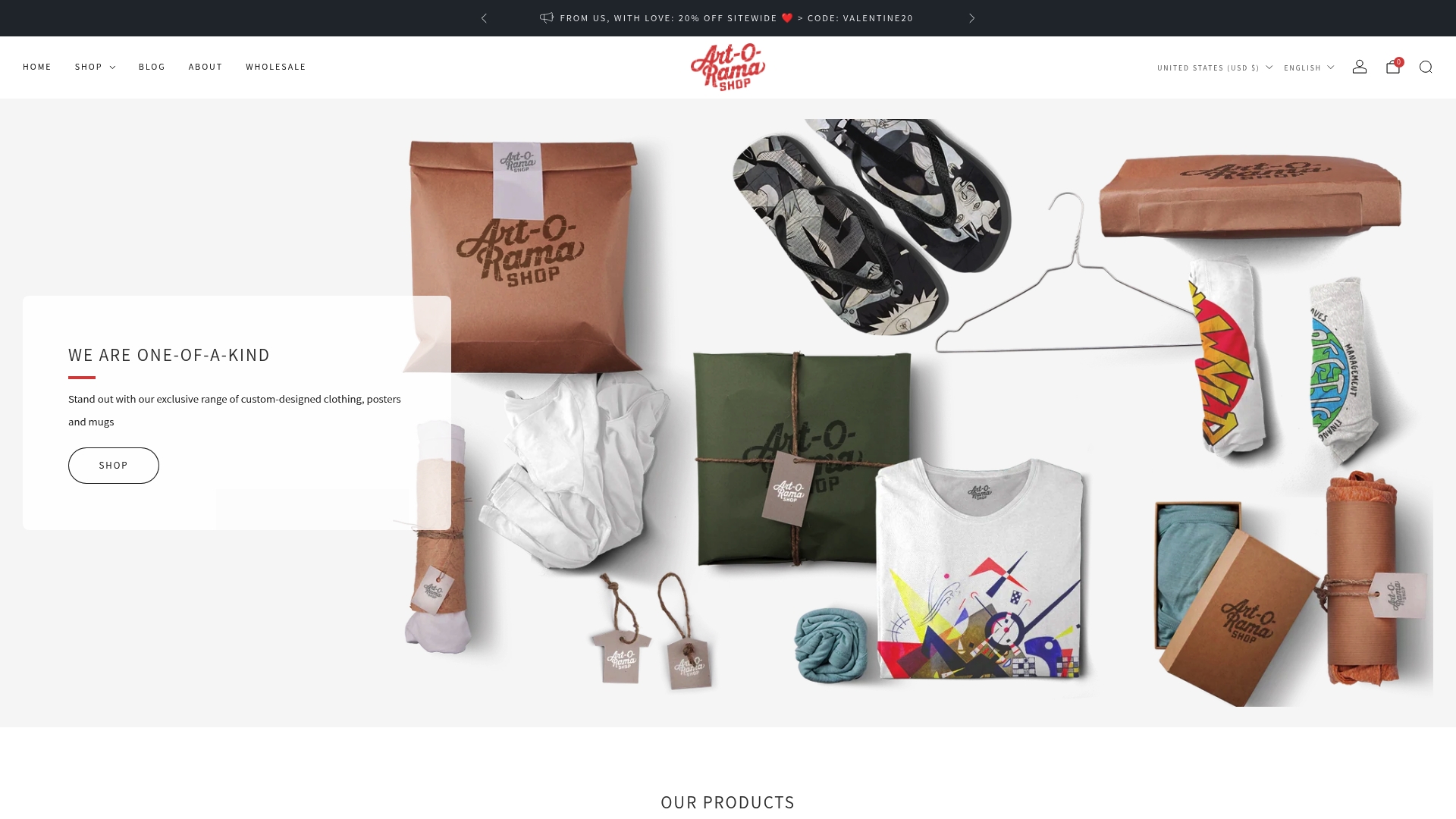
Explore modern art merchandise collections that showcase how Picasso’s Cubism, Matisse’s Fauvism, and Banksy’s street art translate into wearable statements. These aren’t random graphics slapped on fabric but carefully considered designs that honor artistic legacies while speaking to contemporary sensibilities. The 2026 trend toward historically-informed design means consumers increasingly value merchandise that tells stories and carries meaning beyond surface aesthetics.
Discover how modern art merchandise insights reveal the ongoing evolution of art-inspired apparel and collectibles. Understanding these connections transforms shopping from mere consumption into cultural participation. Learn more about pop culture and design expressions that merge historical art movements with current visual language.
Frequently asked questions
What are the main art movements influencing modern design today?
Art Deco and Bauhaus exert the strongest influence on contemporary merchandise design, with Art Deco contributing geometric luxury aesthetics and Bauhaus providing minimalist functional frameworks. Renaissance revival trends also impact 2026 design through classical composition principles and idealized proportions. Pop Art, Cubism, and street art movements shape graphic-heavy merchandise, particularly in apparel and poster categories.
How do designers successfully incorporate art movements without copying superficially?
Successful incorporation requires researching the historical context and philosophical foundations that birthed each movement, then adapting core principles rather than merely copying visual elements. Designers should ask why specific aesthetic choices mattered in their original context before applying them to contemporary merchandise. Superficial copying produces hollow designs that informed consumers recognize as inauthentic, while thoughtful adaptation creates meaningful products that honor artistic legacies.
Why is the collaboration between artists and brands important for merchandise design?
Collaborations like Kusama x Louis Vuitton demonstrate how partnerships between established artists and brands create cultural moments that transcend traditional marketing. These collaborations elevate merchandise from mere products to collectible art objects while making contemporary art accessible to broader audiences. Data shows artist collaborations generate 67% higher engagement and 43% sales increases compared to non-collaborative merchandise, proving their commercial and cultural value.
Can classical art styles be integrated into modern merchandise design?
Absolutely. Classical principles like golden ratio proportions, symmetrical composition, and chiaroscuro lighting translate effectively into contemporary contexts because they’re rooted in human perception rather than cultural fashion. Renaissance and Greek art influences appear in 2026 fashion and digital culture through balanced layouts, idealized forms, and harmonious color relationships. The key is updating classical aesthetics for modern sensibilities while preserving their essential character and underlying principles.

