

Museum Quality Printing: Elevating Art at Home
Feb 04, 2026
Choosing a piece of art for your home or as a gift means more than just finding a beautiful image. For collectors who value authentic artistic expression, understanding what sets museum quality printing apart is essential. With international standards from organizations like the International Council of Museums and the American Alliance of Museums, museum-grade prints offer unmatched color accuracy, archival durability, and professional craftsmanship that protect your investment and enhance your space.
Table of Contents
- Defining Museum Quality Printing Standards
- Types Of Museum Quality Print Materials
- Core Characteristics Of Premium Art Prints
- Printing Techniques For Lasting Results
- Comparing Costs And Common Pitfalls
- Alternatives And What To Avoid
Key Takeaways
| Point | Details |
|---|---|
| Museum Quality Standards | Adhere to guidelines from the International Council of Museums, focusing on color accuracy, archival permanence, and material integrity. |
| Print Material Importance | Use acid-free, archival materials to guarantee long-lasting quality and protection against degradation. |
| Specialized Printing Techniques | Advanced giclée printing techniques ensure precision and durability, making them essential for achieving museum-quality results. |
| Invest in Documentation | Always request technical specifications and archival certifications to ensure the quality and longevity of prints. |
Defining museum quality printing standards
Museum quality printing represents the pinnacle of artistic reproduction, where technical precision meets aesthetic excellence. These standards go far beyond typical poster printing, establishing a rigorous framework that ensures exceptional visual fidelity, archival durability, and preservation of an artwork’s original essence.
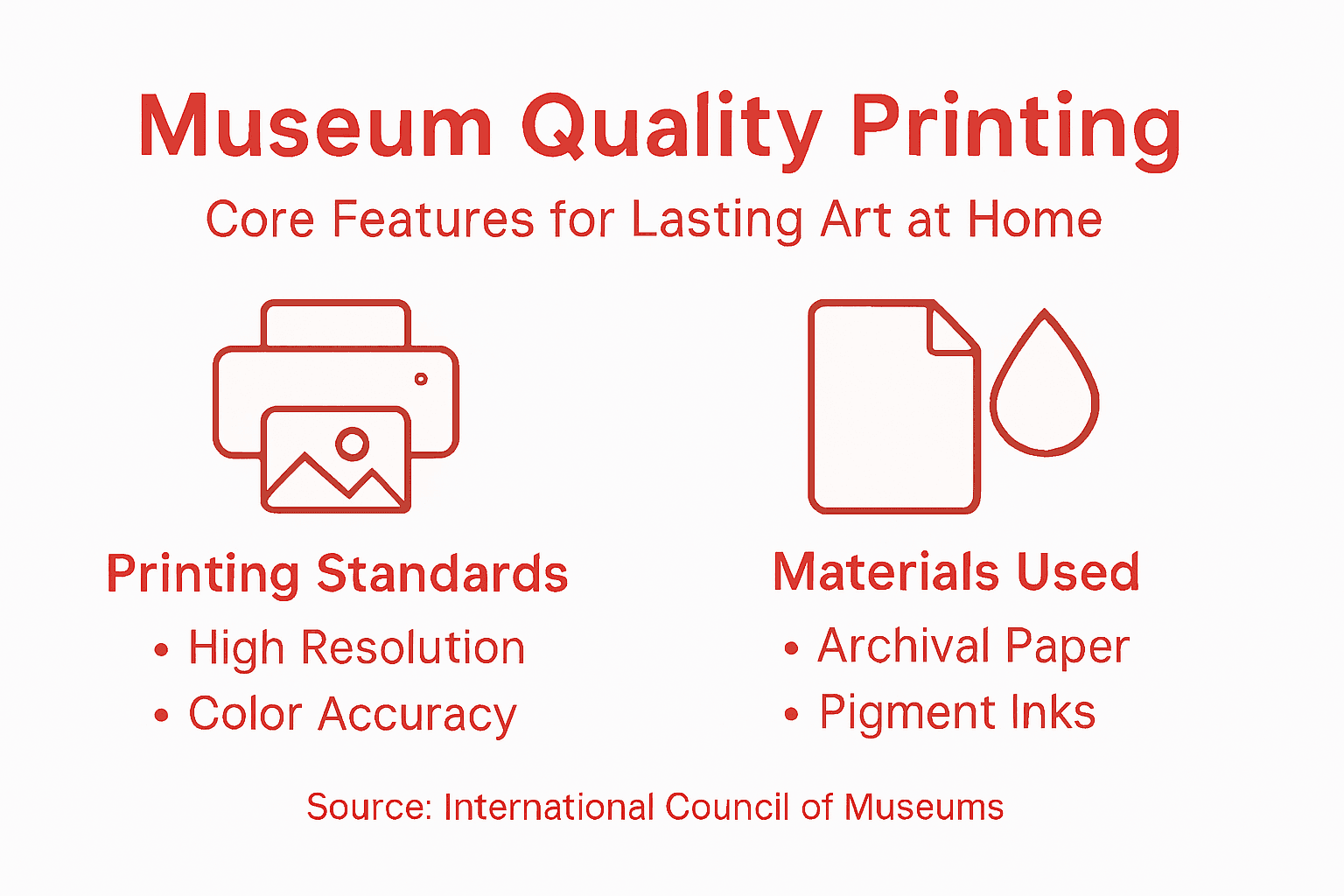
The International Council of Museums (ICOM) provides foundational guidelines that define what constitutes museum-grade print reproduction. These standards encompass multiple critical dimensions:
- Color Accuracy: Precise color matching to the original artwork
- Archival Permanence: Using materials guaranteed to resist fading for 75-100 years
- Substrate Quality: Utilizing acid-free, museum-grade paper or canvas
- Resolution: Minimum 300 DPI digital file requirements
- Pigment Integrity: Employing lightfast, chemically stable printing inks
Additionally, the American Alliance of Museums establishes core standards that emphasize not just technical reproduction, but intellectual and ethical considerations. Museum quality printing must respect the original artist’s vision while providing exceptional visual representation.
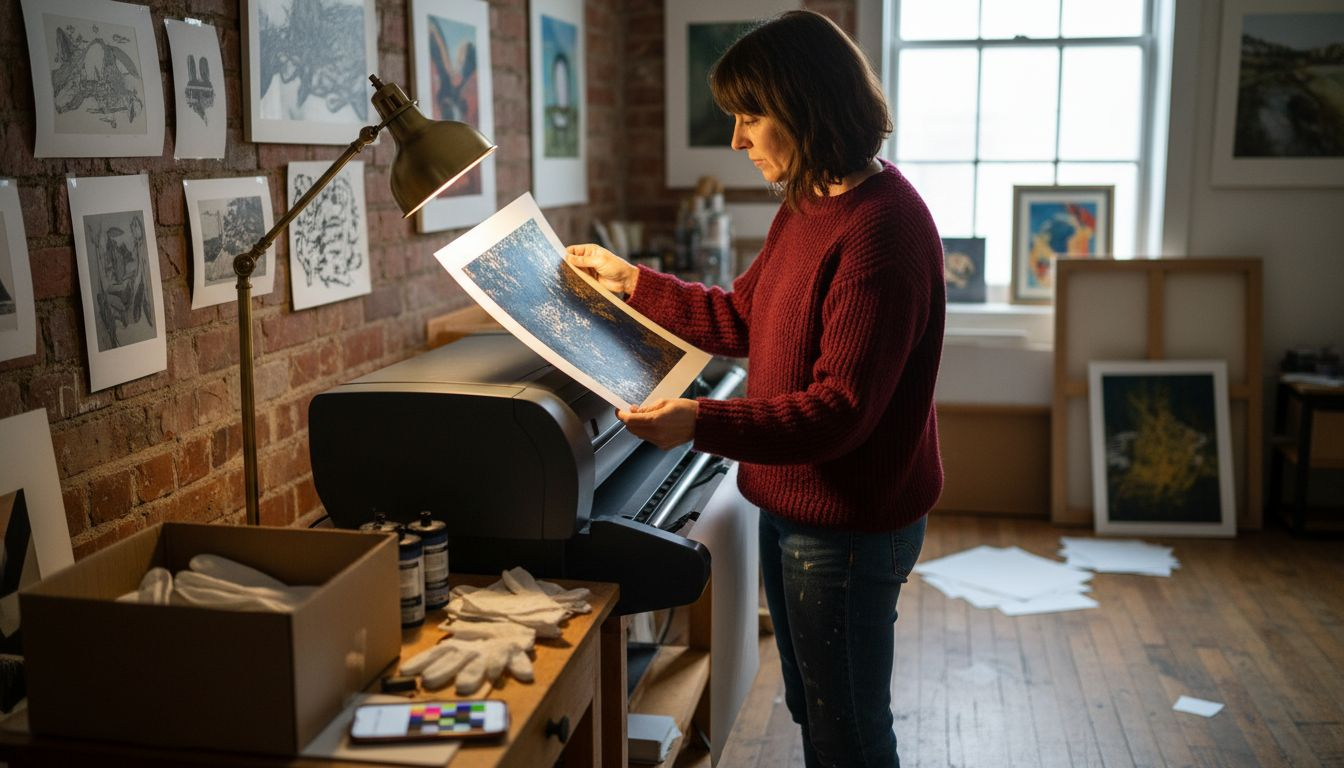
Professional print technicians use specialized equipment to achieve these exacting standards. High-end giclée printers, color calibration systems, and spectrophotometric measurement tools enable unprecedented levels of accuracy. The process involves meticulous color profiling, multiple proof iterations, and expert color management to ensure each print meets museum-level expectations.
Pro tip: Always request a detailed color calibration report and archival certification when purchasing museum quality prints to guarantee professional-grade reproduction.
Here’s how museum quality prints differ from standard prints:
| Aspect | Museum Quality Print | Standard Art Print |
|---|---|---|
| Color Lifespan | 75-100 years fade resistance | 5-20 years fade possible |
| Paper Acidity | Acid-free, pH neutral | May contain acids |
| Ink Technology | Pigment-based, lightfast | Often dye-based |
| Proofing Process | Multiple expert proof iterations | Minimal or automated only |
| Certification | Includes archival documentation | Seldom provided |
Types of museum quality print materials
Museum quality print materials represent a sophisticated intersection of artistic preservation and advanced printing technologies. These specialized materials are meticulously engineered to maintain the integrity, color accuracy, and longevity of artistic reproductions far beyond standard printing techniques.
Artists and collectors seeking museum-grade prints typically rely on fine art inkjet printing materials that offer exceptional durability and visual fidelity. The most prominent print materials include:
- Cotton Rag Papers: 100% cotton, acid-free substrate with exceptional archival properties
- Alpha-Cellulose Papers: Highly stable, lignin-free materials resistant to yellowing
- Watercolor Cold Press Papers: Textured surfaces mimicking traditional painting substrates
- Baryta Papers: High-gloss surfaces with exceptional color depth and contrast
- Satin Finish Papers: Soft, subtle sheen providing elegant visual presentation
Pigment-based printing technologies play a crucial role in achieving museum-quality reproduction. These advanced inks are specifically designed to resist light fading, with documented longevity extending over 100 years under proper archival conditions. The microscopic droplet application of giclée printing ensures unprecedented color accuracy and image detail.
Beyond material composition, museum-grade print materials undergo rigorous testing to verify archival standards. Preservation experts evaluate factors like acid content, lignin presence, color stability, and potential chemical interactions to ensure the print’s long-term integrity. This meticulous approach transforms a simple reproduction into a collectible artifact with lasting historical and artistic value.
Pro tip: Always request a detailed archival certification and light-fastness rating when purchasing museum-quality prints to guarantee optimal preservation and display potential.
Core characteristics of premium art prints
Premium art prints represent a sophisticated fusion of artistic vision and technical precision, elevating visual reproduction to an art form in itself. These exceptional prints go far beyond standard commercial reproductions, embodying a meticulous approach to capturing and preserving artistic expression with unparalleled fidelity.
Artists and collectors recognize museum-quality print characteristics through several critical technical attributes:
- Resolution Quality: Minimum 300 DPI for razor-sharp image detail
- Color Accuracy: Precise pigment-based color matching to original artwork
- Material Integrity: Acid-free, archival-grade paper substrates
- Ink Permanence: Lightfast pigments resistant to fading
- Texture and Weight: Substantial paper stock that enhances visual depth
The printing process for premium art prints demands extraordinary technical sophistication. Advanced giclée technologies enable microscopic ink droplet placement, creating smooth color transitions and capturing nuanced textural details that standard printing methods cannot reproduce. This precision ensures that each print becomes a near-exact representation of the original artistic work.
Beyond technical specifications, premium art prints are distinguished by their long-term preservation potential. Archival-grade materials and pigments are engineered to maintain color integrity and structural stability for decades, potentially spanning multiple generations. Professional conservators evaluate these prints using rigorous standards that assess chemical stability, light resistance, and potential degradation factors.
Pro tip: Always examine the print’s technical specification sheet and request documentation about its archival characteristics before making a purchase.
Printing techniques for lasting results
Printing techniques have evolved dramatically, transforming art reproduction from a simple mechanical process to a sophisticated craft that demands precision, technological mastery, and deep respect for artistic integrity. Modern printing technologies now offer unprecedented opportunities to capture and preserve artistic vision with remarkable fidelity.
The giclée printing process represents the pinnacle of fine art reproduction, utilizing advanced technologies that ensure exceptional quality and longevity. Key techniques for achieving lasting print results include:
- Microscopic Droplet Placement: Precise ink application for seamless gradients
- High-Resolution Scanning: Capturing intricate artwork details at 300+ DPI
- Color Management: Calibrated color profiling for accurate reproduction
- Pigment-Based Inks: Superior color stability and environmental resistance
- Archival Paper Selection: Acid-free substrates preventing degradation
Professional print technicians employ sophisticated color calibration systems that meticulously match original artwork’s chromatic nuances. These systems utilize spectrophotometric measurement tools, ensuring that every print maintains extraordinary color accuracy and tonal depth. Advanced digital workflows allow for multiple proof iterations, guaranteeing that each reproduction meets exacting museum-level standards.
Environmental resistance plays a crucial role in print longevity. Archival pigment inks contain solid particles that provide exceptional protection against light exposure, humidity, and potential color shifting. When combined with professionally selected archival papers, these prints can maintain their visual integrity for over a century, transforming them from mere reproductions into enduring artistic artifacts.
Pro tip: Request a detailed color calibration report and archival certification to validate the print’s long-term preservation potential before making your final selection.
Summary of advanced giclée printing workflow steps:
| Stage | Purpose | Outcome |
|---|---|---|
| High-Res Scanning | Capture every detail of original artwork | Sharp, clear digital file |
| Color Profiling | Match print to original chromatic values | Accurate color reproduction |
| Proof Iterations | Fine-tune every print characteristic | Consistent quality output |
| Final Printing | Use archival materials and premium inks | Long-lasting fine art |
Comparing costs and common pitfalls
Navigating the landscape of museum-quality art prints requires a nuanced understanding of cost structures and potential technical challenges. Investing in high-quality prints is not merely a purchase but a commitment to preserving artistic vision with exceptional technical precision.
Museum print quality comparisons reveal several critical factors that influence pricing and potential pitfalls:
- Material Costs: Archival papers and pigment inks significantly increase production expenses
- Technical Complexity: Advanced color calibration and precision printing techniques drive prices higher
- Labor Intensity: Skilled technicians and multiple proofing stages contribute to overall cost
- Longevity Investment: Higher upfront costs translate to decade-spanning print durability
- Quality Control: Rigorous testing and certification processes add substantial value
Professional print reproduction involves substantial technical expertise and specialized equipment. High-end giclée printers, spectrophotometric color measurement tools, and meticulously calibrated digital workflows ensure exceptional print quality. However, these advanced technologies come with significant financial investments that directly impact the final product’s price.
Common pitfalls in art print selection can dramatically compromise visual integrity and long-term preservation. Collectors should be wary of prints using dye-based inks, non-archival papers, or produced without proper color management. These shortcuts can lead to rapid color degradation, image distortion, and substantial aesthetic deterioration within just a few years of display.
Pro tip: Request a comprehensive technical specification sheet and archival certification to validate the print’s true quality and understand the precise value behind its pricing.
Alternatives and what to avoid
The world of art reproduction offers numerous printing techniques, but not all methods deliver the museum-quality standards discerning collectors demand. Understanding the nuanced landscape of print reproduction requires careful navigation through various technological approaches and potential pitfalls.
Print media preservation strategies reveal several critical alternatives and warning signs for art enthusiasts:
- Risky Technologies: Avoid prints with optical brighteners (OBAs)
- Screening Methods: Consider advanced FM (Frequency Modulated) screening
- Ink Quality: Prioritize archival pigment inks over standard dye-based options
- Paper Selection: Choose acid-free, lignin-free substrates
- Emerging Technologies: Explore 3D printing for specialized reproductions
Alternative printing technologies like FM screening offer sophisticated approaches to image reproduction. Unlike traditional Amplitude Modulated (AM) screening, FM techniques use randomly placed dots of uniform size, eliminating moiré patterns and producing exceptionally sharp, photorealistic images. However, these advanced methods come with higher production costs and require specialized equipment.
Collectors must remain vigilant about potential print degradation risks. Low-quality materials can cause rapid color fading, paper yellowing, and structural breakdown. Non-archival inks, papers with high acid content, and prints containing optical brighteners represent significant risks to long-term art preservation. Professional conservators recommend thoroughly investigating a print’s technical specifications before making an acquisition.
Pro tip: Request comprehensive material certifications and conduct detailed visual inspections to identify potential print quality compromises before finalizing your art collection investment.
Discover Museum Quality Art Merchandise That Brings Masterpieces to Life
Achieving museum quality printing requires precision and archival standards that honor every detail of the original artwork. If you want to surround yourself with exclusive art-inspired pieces that capture that same dedication to color accuracy and longevity but on apparel and collectibles, Artoramashop.com is your ideal destination. From finely printed t-shirts to art-themed posters, each item uses high-resolution printing techniques that echo the meticulous craftsmanship of museum-grade reproductions.
Explore our curated collection now and experience how premium printing elevates your wardrobe and living space with timeless artistic expression. Don’t settle for ordinary prints when you can wear and display statement pieces inspired by iconic artists like Picasso and Banksy. Visit Artoramashop.com today to shop exclusive designs that combine museum-quality standards with contemporary style. Start turning your love for art into everyday inspiration.
Frequently Asked Questions
What are the key characteristics of museum quality prints?
Museum quality prints are defined by attributes such as high resolution (minimum 300 DPI), accurate color reproduction using pigment-based inks, archival-grade materials that are acid-free, and long-lasting ink permanence. These characteristics ensure that the artwork is preserved accurately and can last for decades.
How do museum quality prints differ from standard art prints?
Museum quality prints offer superior color lifespan, utilizing acid-free substrates and lightfast pigments, while standard art prints may contain acids and use dye-based inks, leading to quicker fading and degradation. Additionally, museum quality prints often undergo rigorous proofing processes and come with certification to validate their longevity.
What printing techniques are used to achieve museum quality results?
The giclée printing process is the primary technique used for museum quality prints. It involves high-resolution scanning, microscopic ink droplet placement, color management, and the use of archival materials to ensure exceptional visual fidelity and longevity in artwork reproduction.
What materials are commonly used for museum quality printing?
Common materials for museum quality printing include 100% cotton rag papers, alpha-cellulose papers, watercolor cold press papers, baryta papers, and satin finish papers. These materials are chosen for their durability, archival properties, and ability to enhance the visual presentation of the artwork.
Recommended
- How Can Contemporary Artist Prints Foster Creativity in a Child’s Bedr – Art-O-Rama Shop
- How Can Contemporary Artist Prints Foster Creativity in a Child’s Bedr – Art-O-Rama Shop
- How Can Contemporary Artist Prints Foster Creativity in a Child’s Bedr – Art-O-Rama Shop
- How Can Contemporary Artist Prints Foster Creativity in a Child’s Bedr – Art-O-Rama Shop

