

Why Choose Art-Inspired Wall Art for Modern Living
Feb 27, 2026
Finding wall art that actually reflects your style can feel like a hunt for something meaningful in a world full of generic prints. For young adults who vibe with both pop culture and creative expression, art-inspired wall art does more than fill blank space—it becomes a bold statement of who you are. Bringing together work from renowned artists and iconic cultural movements, these curated pieces offer an accessible path to transforming any bedroom, living room, or workspace into a true extension of your personality.
Table of Contents
- Defining Art-Inspired Wall Art And Misconceptions
- Exploring Popular Styles And Artistic Variations
- Impact On Mood, Expression, And Identity
- How Art Elevates Interior Design Harmony
- Costs, Alternatives, And Common Mistakes
Key Takeaways
| Point | Details |
|---|---|
| Art-Inspired Wall Art is More Than Decoration | It serves as a deliberate expression of identity, bridging gallery aesthetics with personal spaces. |
| Misconceptions About Art | Art-inspired pieces are accessible and should reflect personal significance, not elitism or expense. |
| Diverse Styles Communicate Different Emotions | Each art style—be it Abstract, Pop Art, or Street Art—conveys unique messages and feelings. |
| Art Influences Mood and Identity | The art surrounding you shapes emotional responses and reinforces self-expressions in your living space. |
Defining Art-Inspired Wall Art and Misconceptions
Art-inspired wall art is far more than just decoration hanging on your walls. It’s a deliberate expression of identity that bridges the gap between gallery spaces and everyday living. Think of it as bringing museum-quality aesthetics into rooms where you actually spend time—your bedroom, living room, or workspace.
At its core, art-inspired wall art encompasses pieces featuring designs from renowned artists, pop culture icons, and artistic movements. This includes posters, prints, and wall hangings showcasing work by masters like Picasso, Matisse, or contemporary artists like Banksy. The key distinction: these aren’t mass-produced generic prints. They’re curated, high-resolution reproductions that capture the essence of original artwork.
Wall art serves as a key interface in architectural design, contributing to enhanced aesthetic enjoyment in your living space. This means your art choices aren’t just about personal preference—they actively shape how you feel in your environment. Lighting, color palette, and composition all influence the emotional atmosphere of a room.
Now let’s tackle the misconceptions head-on. Many people still believe art-inspired wall art is:
- Pretentious or elitist — That owning art prints means you’re trying too hard or showing off
- Expensive and exclusive — That authentic art-inspired pieces cost thousands of dollars
- Only for art majors — That you need formal training to appreciate or display art
- Outdated and stuffy — That modern living spaces don’t benefit from classical or contemporary art
- Just background decoration — That wall art serves no meaningful purpose beyond filling blank space
Here’s the reality: art-inspired wall art democratizes creative expression. You don’t need a trust fund or art history degree to surround yourself with pieces that inspire you. Art as research and creative practice extends beyond academic settings into your personal spaces, reflecting who you are and what resonates with you emotionally.
Your generation understands this intuitively. You grew up with digital art, memes as contemporary folk art, and pop culture as legitimate creative expression. Art-inspired wall art simply formalizes what you already know: artistic expression belongs everywhere, not just museums.
The misconception that matters most? That art-inspired wall art is a luxury. It’s actually an accessible form of self-expression. Whether you’re drawn to Matisse’s bold abstractions, Banksy’s street art rebellion, or vintage horror cinema aesthetics, wall art lets your walls tell your story.
Art-inspired wall art transforms a blank wall from lifeless to meaningful—it’s the difference between living in a space and truly inhabiting one.
Pro tip: Start by choosing one piece that genuinely speaks to you rather than trying to fill every wall at once; one powerful, authentic choice creates more impact than five pieces you’re unsure about.
Exploring Popular Styles and Artistic Variations
Art-inspired wall art isn’t a one-size-fits-all category. The diversity of styles available means you can find pieces that align perfectly with your aesthetic, whether you’re drawn to bold, chaotic energy or serene minimalism. Understanding these variations helps you make choices that genuinely reflect who you are.
Abstract art dominates modern wall art for a reason. It uses shapes, colors, and textures to trigger emotions rather than represent reality. A splatter of crimson against white canvas hits differently than a photorealistic portrait—it makes you feel before you think.
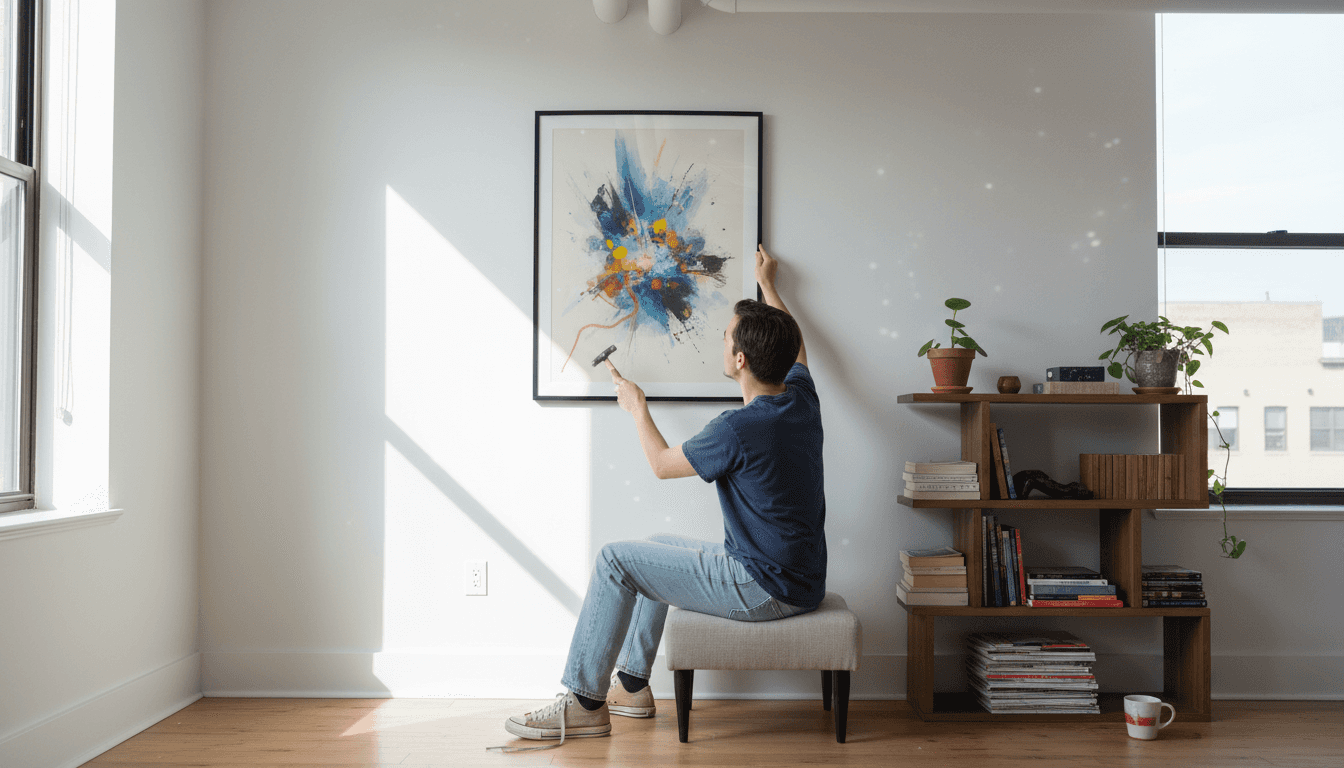
Pop art brings the energy of comic books, advertising, and celebrity culture into your space. Think bright colors, bold outlines, and instantly recognizable imagery. Popular pop art styles capture that rebellious, youth-driven spirit that resonates with your generation.
Art Nouveau takes the opposite approach with organic motifs and flowing lines. Think nature-inspired curves, botanical elements, and vintage elegance. It’s perfect if you want sophistication without stuffiness.
Modernism challenges tradition entirely. It experiments with form, rejects unnecessary decoration, and asks “why?” about every design choice. Wall art encompasses diverse styles from canvas reproductions to mixed media installations, allowing you to push boundaries.
Collage blends disparate materials and images into textured, layered compositions. It’s visually complex and tells multiple stories at once—perfect for walls that need personality.
Street art and graffiti aesthetics bring urban energy indoors. These pieces challenge formality and embrace imperfection as artistic strength. Banksy’s work exemplifies how street art transcends its origins to become gallery-worthy.
Here’s what matters: each style communicates something different.
- Abstract = Emotional depth and interpretation
- Pop art = Energy, humor, and cultural commentary
- Art Nouveau = Elegance and nature-inspired beauty
- Modernism = Intentionality and challenging conventions
- Collage = Complexity and layered meaning
- Street art = Rebellion and authenticity
Your wall art choice isn’t just decoration—it’s a statement about what you value and how you see the world.
Most people think they have to choose one style and commit forever. Wrong. Mix abstract pieces with pop art. Layer vintage Art Nouveau with contemporary street art aesthetics. Your space should feel like you, not like a design magazine spread.
Here’s a quick comparison of art-inspired wall art styles and what they communicate:
| Style | Visual Traits | Emotional Impact | Typical Subject Matter |
|---|---|---|---|
| Abstract | Fluid shapes, bold colors | Provokes introspection | Color fields, ambiguous forms |
| Pop Art | Bright hues, graphic design | Energizes, playful | Celebrities, icons, products |
| Art Nouveau | Curved lines, organic motifs | Elegant, calming | Nature, flowers, figures |
| Modernism | Minimalist, geometric | Thought-provoking, edgy | Shapes, concepts, textures |
| Collage | Layered, mixed media | Complex, story-rich | Photos, magazine cutouts |
| Street Art | Graffiti style, bold strokes | Rebellious, authentic | Urban scenes, statements |
Pro tip: Start by collecting pieces from 2-3 styles that genuinely move you, then arrange them with intentional spacing rather than filling every wall; this creates visual rhythm and lets each piece breathe.
Impact on Mood, Expression, and Identity
Your walls aren’t just walls. They’re mirrors of your inner world. The art you surround yourself with influences how you feel, what you express, and fundamentally who you become. This isn’t poetic exaggeration—it’s neuroscience.
When you look at art on your walls, your brain activates in specific ways. Creative arts engagement activates emotional regulation pathways in areas like the prefrontal cortex and amygdala. Translation: viewing art literally changes how your brain processes emotions. A bold abstract piece doesn’t just hang there—it rewires your emotional responses over time.
This matters for mood regulation. Surrounding yourself with art that resonates creates a calming or energizing effect depending on what you choose. Abstract pieces with cool blues and greens trigger different neurological responses than vibrant pop art with shocking yellows and reds. Your space becomes a mood-setting tool you use without thinking about it.
Expression through walls is real. The art you display tells visitors—and reminds you—what you value. Maybe you surround yourself with Matisse’s organic shapes because you crave beauty and flow. Or you fill your walls with Banksy because you want to signal that you question authority and embrace rebellion. Your walls become your manifesto without you saying a word.
Identity formation happens through visual environments more than most people realize. Visual art participation fosters personal expression and self-efficacy, particularly in younger adults. When you curate art that speaks to you, you’re not just decorating—you’re actively constructing your sense of self.
Consider this: you’re 18-35, navigating identity constantly. Career changes, relationship shifts, evolving values. Art-inspired wall art becomes a visual anchor for who you are right now. It evolves with you.
The psychological impacts break down into three core areas:
- Mood elevation — Colors, compositions, and themes trigger emotional states
- Identity reinforcement — Your choices become visible statements about your values
- Creative stimulation — Art activates parts of your brain associated with innovation
Your wall art doesn’t just decorate your space—it actively shapes your emotional well-being and how you see yourself.
This explains why changing your wall art feels transformative. You’re not just swapping posters. You’re literally rewiring neural pathways and recalibrating your identity through visual environment design.
Pro tip: Choose one piece that represents where you want to be emotionally or mentally, not where you are now—this creates aspirational mood shifts that gradually reshape your psychological baseline over weeks.
How Art Elevates Interior Design Harmony
Harmony in interior design doesn’t mean everything matches perfectly. It means the elements work together to create a cohesive experience. Art is the secret ingredient that ties everything together.
Think about walking into a room with beautiful furniture, neutral walls, and quality lighting—but nothing on the walls. It feels incomplete. Now add one bold piece of art. Suddenly, the entire room comes alive. That’s harmony in action.
Art fundamentally shapes interior design by setting tone and enhancing atmosphere, creating identity within spaces. It works by establishing focal points that anchor your eye, defining visual zones without needing walls, and balancing proportions across the room.
Here’s how art creates harmony specifically:
- Creates visual anchors — A strong piece draws the eye and gives direction to the entire room
- Connects color schemes — Art pulls colors from furniture, textiles, and accessories into conversation
- Establishes mood — The emotional tone of your art influences how every other element feels
- Defines space — Without moving furniture, art can visually separate areas and create flow
- Bridges styles — A well-chosen piece can merge different design aesthetics into one cohesive vision
Consider your bedroom. You have a bed, a dresser, nightstands—functional pieces scattered around. Add a large abstract print above the bed in colors that echo your bedding, and suddenly those scattered elements become a unified composition. The eye travels from the art to the coordinating colors in your textiles, creating visual rhythm.
The same principle applies to living rooms, home offices, or entryways. Art serves as a transformative tool within interior design, enriching spaces through personal expression and spatial modification. This isn’t about expensive gallery pieces—it’s about intentional curation.
To summarize, here are interior design benefits of choosing art for your space:
| Benefit | How Art Achieves It | Visual Example |
|---|---|---|
| Creates focal point | Draws attention, anchors décor | Large print above sofa |
| Connects color palette | Unites furnishings and textiles | Colors echo in pillows |
| Establishes mood | Infuses room with emotion | Vibrant pop art energizes |
| Defines zones | Differentiates spaces visually | Multiple pieces in hallway |
| Bridges styles | Links diverse design elements | Juxtaposed vintage/modern |
Art doesn’t just decorate a room; it orchestrates how all elements communicate with each other.
Dimensions matter too. A small print in a large living room feels lost. A massive statement piece in a tiny bedroom overwhelms. The size and scale of your art should relate proportionally to your space and furniture.
Color is critical. If your furniture is warm and earthy, cool-toned abstract art might create tension rather than harmony. If you’re working with minimalist white walls and black furniture, a vibrant pop art piece becomes intentional contrast—which is its own form of harmony when done deliberately.
Placement creates flow. Centering art above furniture anchors a seating area. Grouping smaller pieces creates movement and guides the eye around the room. Intentional arrangement elevates the entire design scheme.
Pro tip: Choose one piece that contains colors already present in your room (on furniture, textiles, or accessories), then let that become your design anchor—everything else will automatically feel more connected.
Costs, Alternatives, and Common Mistakes
The biggest misconception about art-inspired wall art? That it requires a trust fund. You can build a meaningful collection without breaking the bank. Budget-friendly options exist at every price point, from completely free to mid-range investments.
Let’s address cost reality first. Original paintings from established artists run thousands of dollars. But that’s not what most people need. High-quality art reproductions and prints range from $20 to $200 depending on size and printing quality. Posters cost even less. The sweet spot for most 18-35-year-olds is $40-$100 per piece—quality printing without luxury pricing.
Affordable alternatives include art rentals, online prints, DIY projects, and public domain images. Art rental services let you swap pieces monthly, perfect for testing styles before committing. Online marketplaces like Etsy, society6, and independent artist sites offer thousands of designs at various price points. DIY framing of personal photographs, concert tickets, or creative materials costs minimal money while maximizing personal significance.
Budget breakdown by option:
- High-resolution prints — $30-$150 per piece, shipped
- Posters and reproductions — $15-$60, lightweight and affordable
- Art rentals — $50-$150 monthly for rotating pieces
- DIY framing projects — $20-$60 with found materials
- Public domain digital images — $0 (print at home or local printer)
Now for the mistakes. Most people sabotage their own success by making predictable choices.
Mistake #1: Buying without personal connection. You grab a trendy piece because it’s on sale or matches your couch. Three months later, you don’t connect with it emotionally. Art that doesn’t resonate becomes invisible—your brain stops seeing it. Choose pieces that actually mean something to you, even if that meaning is just “this makes me smile.”
Mistake #2: Purchasing mass-produced pieces from big-box stores. The same print hangs in 10,000 apartments. Your space loses individuality. Sourcing meaningful works that resonate personally and prioritizing unique pieces creates authenticity your space will actually feel.
Mistake #3: Ignoring scale. A tiny 8x10 print on a 10-foot wall disappears. A massive 4x6 foot piece in a bedroom feels claustrophobic. Match proportions to your wall and furniture. Generally, your art should occupy about 60% of wall space above a couch or bed.
Mistake #4: Forgetting about balance. Beautiful art surrounded by clutter gets lost. The wall around your piece matters as much as the piece itself.
Art you don’t love will never transform your space—it’ll just take up wall real estate.
One more thing: avoid buying when emotional. Never impulse-buy art on a bad day hoping it’ll fix your mood. Wait 48 hours. If you still want it, that’s your signal to commit.
Pro tip: Start with one affordable piece under $50 from an artist or style that genuinely moves you, display it for two weeks to live with the choice, then expand your collection with confidence based on what actually works in your space.
Elevate Your Space with Art-Inspired Style from ArtoramaShop
The article highlights the challenge of finding meaningful, expressive art that transforms your living space without feeling pretentious or overly expensive. You want wall art and décor that resonates emotionally and reflects who you are right now. Art-inspired pieces that create harmony, evoke mood, and become powerful statements about your identity are essential. At the same time, affordability and personal connection matter more than ever.
ArtoramaShop.com specializes in exactly that unique blend of style and accessibility. Our collection features exclusive, high-resolution prints and art-themed apparel inspired by iconic artists like Picasso, Matisse, and Banksy. Whether you seek bold posters to become your room’s focal point or expressive clothing to wear your passion, we offer curated items that bring museum-quality aesthetics into your everyday life without the museum price. Discover art that suits your mood, style, and space—and let your walls and wardrobe speak your truth.
Browse our exclusive selection now at ArtoramaShop.com and start transforming your environment with pieces that inspire emotional depth and personal identity today. Ready to make your space truly yours with art-inspired wall decor and stylish apparel Explore unique statement pieces from renowned masters on ArtoramaShop.com and embrace the power of art in your modern living.
Frequently Asked Questions
What is art-inspired wall art?
Art-inspired wall art refers to curated pieces that showcase designs from renowned artists and movements, bringing gallery-quality aesthetics into everyday spaces.
How does wall art affect mood and emotions?
Wall art can elevate mood by influencing emotional responses in the brain. Different colors and styles evoke various feelings, making your space a tool for mood regulation.
Can I mix different styles of art in my home?
Yes, you can mix different art styles! Combining abstract, pop art, and other forms can create a unique expression of your personality and enhance visual interest in your space.
What are some common mistakes when choosing wall art?
Common mistakes include purchasing art without personal connection, ignoring scale, and overcrowding art with clutter. It’s essential to choose pieces that resonate with you and fit well within your space.

