

Wearable Art Explained: Transforming Fashion Into Expression
Feb 15, 2026
Finding clothing that speaks to your artistic soul can feel nearly impossible when mainstream fashion offers only mass-produced trends. The rise of wearable art in the 1960s and 1970s created a space where self-expression meets handcrafted excellence, inviting you to embrace clothing as a canvas for identity and culture. Discover how these one-of-a-kind creations blend narrative, innovation, and personal vision, allowing you to collect pieces that boldly reflect your creative journey.
Table of Contents
- Defining Wearable Art And Its Origins
- Major Types And Artistic Approaches
- Key Features Of Wearable Art Pieces
- Creative Process From Design To Wear
- Choosing And Caring For Wearable Art
Key Takeaways
| Point | Details |
|---|---|
| Wearable Art as Expression | Wearable art transcends traditional fashion, emphasizing personal and cultural narratives over mass-produced design. |
| Diverse Techniques | Artists use a variety of techniques, including textile manipulation and the integration of technology, to push the boundaries of clothing as art. |
| Importance of Care | Selecting and preserving wearable art requires understanding material complexities and ensuring proper storage conditions to maintain integrity. |
| Collaborative Creation | Modern wearable art often involves collaboration among designers, technologists, and artists to create innovative pieces. |
Defining Wearable Art And Its Origins
Wearable art represents a radical departure from traditional fashion, transforming clothing into a dynamic medium of personal and cultural expression. Emerging from social movements during the 1960s and 1970s, this art form challenges conventional aesthetic boundaries by prioritizing individual creativity and narrative over mass-produced design.
The origins of wearable art can be traced back to the Arts and Crafts movement, which emphasized handcrafted excellence and rejected industrial standardization. Key characteristics include:
- Unique, one-of-a-kind design pieces
- Incorporation of unconventional materials
- Personal storytelling through clothing
- Rejection of mass-production techniques
- Emphasis on individual artistic vision
Unlike traditional fashion, wearable art is intensely personal and often political. Artists use clothing as a canvas, integrating textiles, metals, plastics, and other materials to communicate complex narratives about identity, social movements, and cultural experiences. Feminist art movements and countercultural groups significantly influenced this artistic approach, positioning clothing as a powerful form of self-expression.
Historically, wearable art evolved from avant-garde dress experiments in the 19th century, gaining momentum through artists who saw fashion as more than mere functional covering. These creators viewed clothing as a potential art form that could challenge societal norms, provoke dialogue, and represent individual experiences.
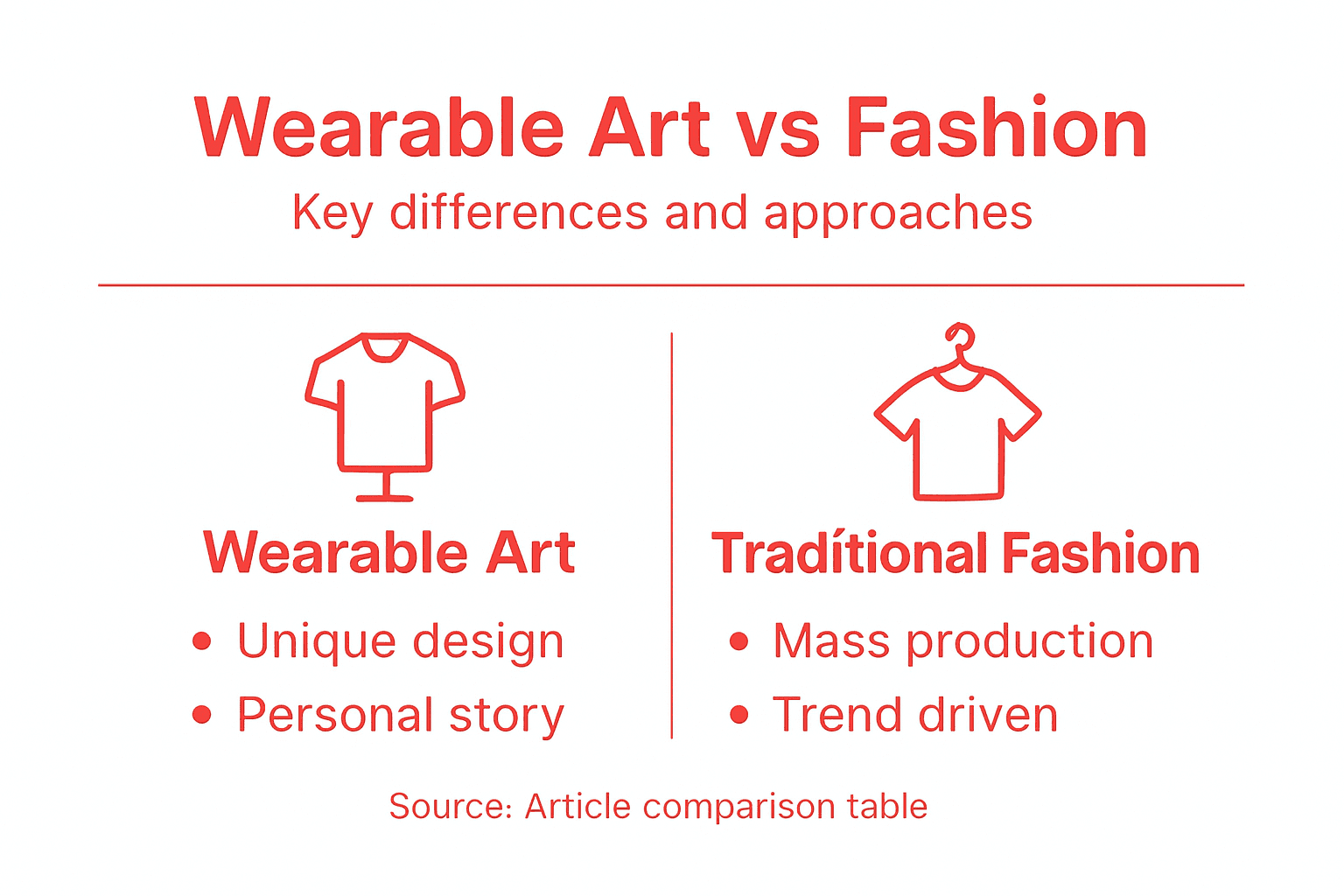
Here’s a comparison of how wearable art differs from traditional fashion in form, impact, and purpose:
| Aspect | Wearable Art | Traditional Fashion |
|---|---|---|
| Design Approach | Artist-driven, narrative focus | Trend-driven, commercial focus |
| Material Choices | Unconventional, mixed media | Standard textiles, predictable |
| Intended Impact | Personal expression, cultural statement | Mass appeal, functional style |
| Production Scale | One-of-a-kind, handcrafted | Large-scale, mass-produced |
Pro tip: Begin exploring wearable art by collecting unique pieces that tell a personal story and reflect your individual aesthetic journey.
Major Types And Artistic Approaches
Wearable art encompasses a diverse range of artistic expressions that transcend traditional fashion boundaries. Artists develop unique design methods by integrating conceptual themes, storytelling, and extensive research into their creative process. These approaches transform clothing from mere functional items into powerful narrative canvases.
The major types of wearable art can be categorized into several distinct artistic approaches:
- Textile Manipulation: Techniques like embroidery, dyeing, and complex fabric sculpting
- Performance Art Clothing: Pieces designed for movement and theatrical expression
- Technological Wearables: Integration of digital elements like LEDs and electronic sensors
- Cultural Narrative Designs: Clothing that communicates historical or personal stories
- Feminist and Activist Art: Garments that challenge social norms and communicate political messages
Traditional craft techniques play a significant role in wearable art, with artists utilizing methods like knitting, crocheting, and quilting to create intricate pieces. Handcrafted techniques allow for unprecedented levels of personal expression, enabling artists to embed deep cultural and emotional narratives into their work.
Modern wearable art also embraces technological innovation, expanding beyond traditional textile approaches. Contemporary artists experiment with unconventional materials such as plastics, metals, and even digital interfaces, creating hybrid forms that blur the boundaries between fashion, art, and technology.
Pro tip: Explore local art exhibitions and workshops to understand the diverse techniques and approaches used in contemporary wearable art creation.
Key Features Of Wearable Art Pieces
Technological innovation transforms wearable art into interactive, boundary-pushing artistic expressions that challenge traditional fashion concepts. These pieces transcend mere clothing, becoming dynamic canvases that communicate complex narratives through design, material, and technological integration.
The key features of wearable art pieces can be categorized into several distinctive elements:
- Unique Craftsmanship: Handmade techniques that ensure no two pieces are identical
- Narrative Complexity: Designs that tell personal or cultural stories
- Material Experimentation: Using unconventional materials like metals, plastics, and digital components
- Interactive Elements: Incorporating responsive technologies like sensors and LED systems
- Artistic Conceptualization: Prioritizing creative expression over traditional functionality
Technological integration represents a groundbreaking aspect of contemporary wearable art. Modern artists incorporate advanced elements such as fiber optics, microcontrollers, and digital interfaces, transforming garments into dynamic, responsive art pieces that can change color, shape, or interact with environmental stimuli.
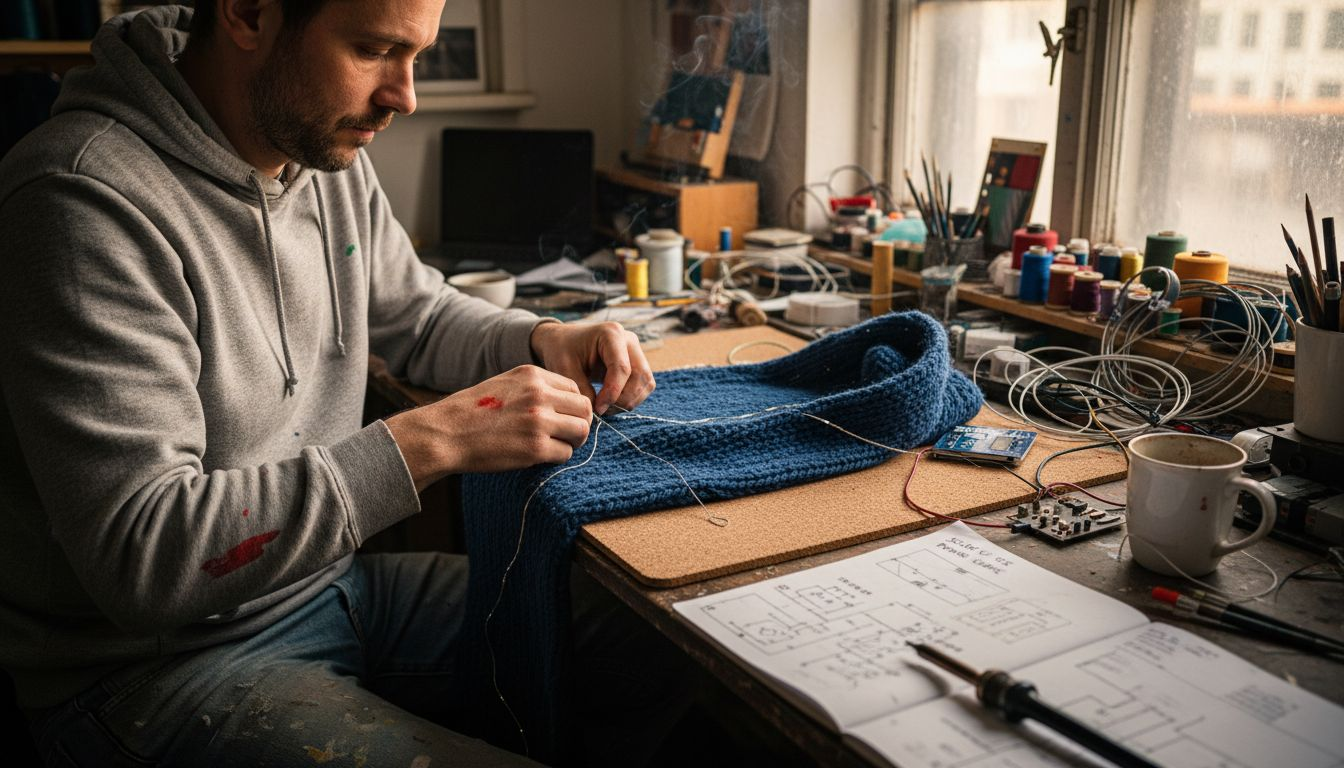
Traditional craftsmanship remains equally important, with artists employing techniques like intricate knitting, leather tooling, complex weaving, and sophisticated dyeing processes. These methods allow for unprecedented levels of personal expression, creating garments that are simultaneously sculptural art pieces and wearable objects.
Pro tip: Attend local art exhibitions and maker spaces to explore the latest innovations in wearable art and technological design.
Creative Process From Design To Wear
Collaborative design processes transform wearable art from conceptual inspiration to tangible artistic expression. Artists and designers embark on a meticulous journey that blends creative vision with technical precision, ensuring each piece tells a unique narrative while maintaining functional wearability.
The creative process for wearable art typically involves several critical stages:
- Artistic Inspiration: Selecting foundational visual or conceptual themes
- Conceptual Research: Analyzing aesthetic values and emotional resonance
- Design Development: Translating inspiration into textile and material forms
- Prototype Creation: Experimenting with techniques like digital printing and embroidery
- Iterative Refinement: Professional review and continuous design modification
Artistic translation represents a crucial element of the wearable art design process. Designers carefully deconstruct their original artistic inspiration, whether from paintings, cultural symbols, or personal experiences, and meticulously reimagine these elements as wearable textile narratives. This requires a delicate balance between preserving the artwork’s core emotional message and ensuring the piece remains culturally accessible and physically comfortable.
Modern wearable art design increasingly embraces technological integration and collaborative methodologies. Designers now work across disciplines, incorporating input from fashion technologists, textile engineers, and digital artists to create pieces that push the boundaries of traditional artistic expression. These collaborative approaches enable more complex, multidimensional designs that challenge viewers’ expectations of clothing as a medium.
Pro tip: Document your design inspiration and creative process through sketches and mood boards to track the evolution of your artistic vision.
Choosing And Caring For Wearable Art
Museum conservation practices reveal the complexity of selecting and maintaining wearable art pieces. Choosing a wearable art piece involves careful consideration of material composition, artistic integrity, and personal connection, while preserving these unique creations requires specialized knowledge and delicate handling.
When selecting wearable art, consider these critical factors:
- Material Complexity: Evaluate diverse materials from traditional textiles to unconventional elements like metals and plastics
- Artistic Narrative: Understand the piece’s conceptual background and emotional resonance
- Preservation Potential: Assess the artwork’s durability and conservation requirements
- Personal Alignment: Ensure the piece reflects your individual aesthetic and artistic sensibilities
- Authenticity: Verify the artwork’s provenance and artistic authenticity
Preservation techniques are crucial for maintaining the integrity of wearable art. Different materials demand unique care strategies, from delicate textile conservation to protecting metallic or digital components. This requires understanding environmental factors, handling protocols, and specialized storage conditions that prevent degradation while maintaining the artwork’s original artistic vision.
Contemporary wearable art conservation integrates insights from multiple disciplines, including fashion studies, material science, and art preservation. Curators and collectors must develop nuanced approaches that balance aesthetic preservation with the potential for continued wear and interaction, ensuring these artistic pieces remain vibrant and meaningful over time.
The following summary highlights common challenges and care strategies for wearable art collectors:
| Challenge | Why It Matters | Care Strategy |
|---|---|---|
| Material Fragility | Unique materials may degrade | Controlled environment storage |
| Artistic Documentation | Provenance affects value | Keep records and certificates |
| Technological Elements | Electronics need maintenance | Regular technical check-ups |
| Environmental Factors | Light and humidity damage | Use archival, acid-free materials |
Pro tip: Consult professional conservators and use acid-free archival materials when storing and protecting your most delicate wearable art pieces.
Discover How Wearable Art Transforms Your Style Into Personal Expression
The article highlights the unique challenge of finding clothing that goes beyond traditional fashion to become a form of personal storytelling and artistic expression. If you are inspired by the idea of wearable art as a medium for cultural narratives and individual creativity you will appreciate the exclusive art-inspired apparel at ArtoramaShop. Our curated collection of custom-designed t-shirts, hoodies, and long sleeves by renowned artists like Picasso and Banksy brings the concept of wearable art to everyday life with high-quality prints and unique designs.
Elevate your wardrobe by selecting pieces that reflect your artistic passion and make a statement every time you wear them. Explore the diverse art styles and iconic artworks featured at Artoramashop.com to find the perfect fusion of style and expression. Don’t wait to transform your apparel into a canvas for your personal story visit Artoramashop now and start your journey into the world of wearable art.
Frequently Asked Questions
What is wearable art?
Wearable art is a form of artistic expression where clothing is transformed into a canvas, incorporating unique designs and unconventional materials to tell personal stories or communicate cultural narratives.
How does wearable art differ from traditional fashion?
Wearable art prioritizes individual creativity and narrative over commercial trends, focusing on one-of-a-kind designs made from unconventional materials, while traditional fashion typically emphasizes mass production and mass appeal.
What are the major types of wearable art?
The major types of wearable art include textile manipulation techniques, performance art clothing, technological wearables, cultural narrative designs, and garments that convey feminist or activist messages.
How should I care for wearable art pieces?
Caring for wearable art involves understanding the unique materials used, ensuring proper storage in a controlled environment, and following specialized preservation techniques to maintain the piece’s integrity and aesthetic quality.

