

Top educational art posters to enhance creative learning
Mar 15, 2026
Choosing the right educational art posters transforms learning spaces into vibrant environments that spark curiosity and deepen understanding. Art educators and parents face the challenge of selecting posters that balance visual appeal with genuine pedagogical value. This article provides a criteria-driven framework to evaluate poster options, showcasing top choices that enhance student engagement and creative thinking. You’ll discover expert-vetted selections designed to boost retention, inspire artistic exploration, and create dynamic learning environments that resonate with students of all ages.
Table of Contents
- Criteria For Choosing Educational Art Posters
- Top Educational Art Posters For Creative Learning Environments
- Comparison Of Educational Art Poster Features
- Making The Right Choice: Recommendations For Educators And Parents
- Enhance Your Creative Learning Space With Quality Educational Art Posters
- Frequently Asked Questions About Educational Art Posters
Key takeaways
| Point | Details |
|---|---|
| Visual design principles drive engagement | Color theory, composition, and typography directly impact how students absorb and retain information |
| Balance text and imagery carefully | Effective posters simplify complex concepts without overwhelming learners with excessive text |
| Quality materials ensure longevity | Durable, high-resolution printing maintains visual impact through years of classroom use |
| Pedagogical design boosts retention | Well-structured posters can increase information recall by 20-30% compared to text-only materials |
| Age-appropriate content matters | Matching poster complexity and style to student developmental stages maximizes learning outcomes |
Criteria for choosing educational art posters
Selecting effective educational art posters requires understanding visual design principles in education that capture attention and facilitate learning. Start by evaluating visual hierarchy. Your eye should move naturally through the poster, with the most important information standing out immediately. Color theory plays a crucial role here. Warm colors like red and orange grab attention for key concepts, while cool blues and greens work well for supporting details.
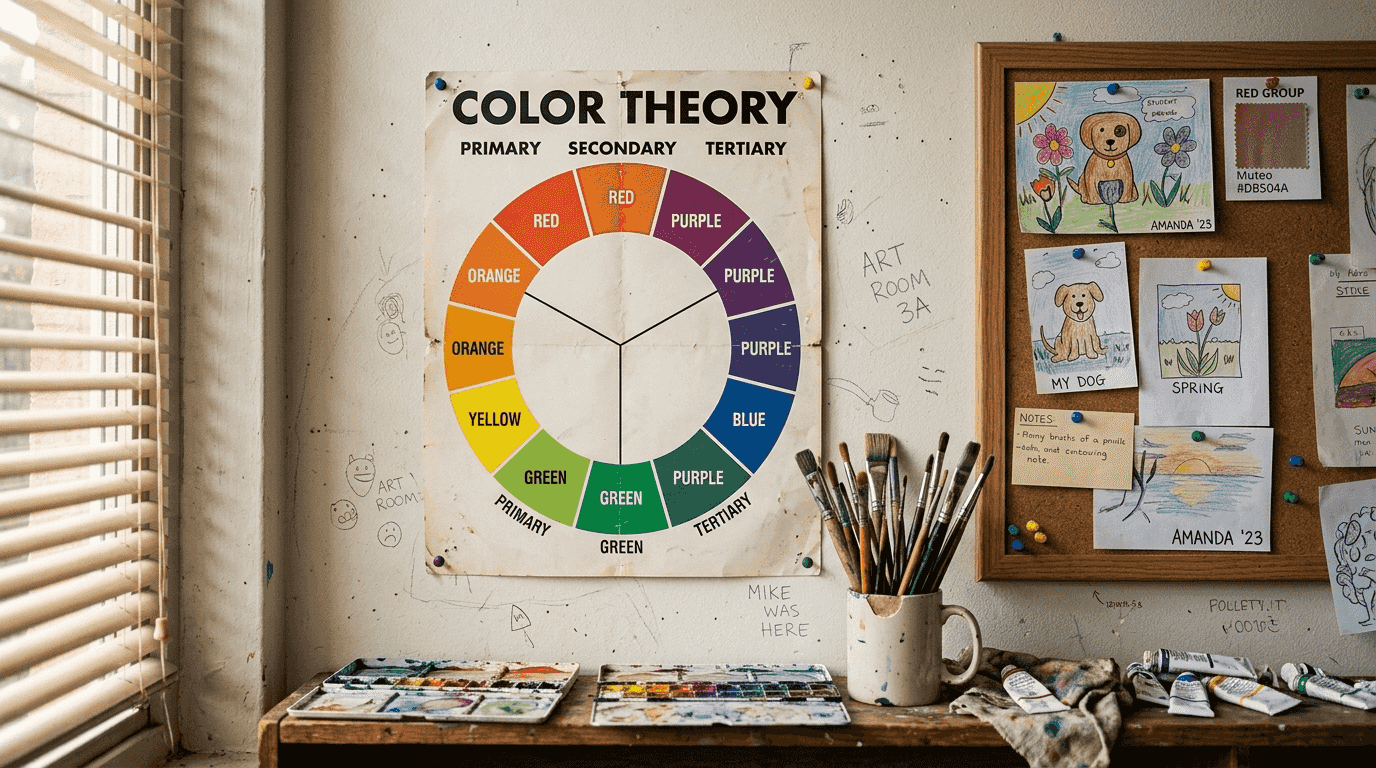
Typography deserves careful consideration. Fonts must be legible from across the classroom, with clear contrast between text and background. Avoid posters that cram too much information into small spaces. The best educational posters simplify complex ideas through strategic use of diagrams, icons, and minimal text. A poster explaining color theory should show vivid color wheels and mixing examples, not paragraphs of technical definitions.
Balance is everything. Text-heavy posters overwhelm students and get ignored. Image-only posters without context confuse rather than clarify. Aim for a 60/40 split favoring visuals, with concise labels and explanations. Age appropriateness matters tremendously. Elementary students respond to playful illustrations and bold colors, while high school learners appreciate sophisticated design and nuanced concepts.
Material quality directly impacts longevity. Look for thick cardstock or laminated options that resist tears, fading, and classroom wear. Cheap paper posters curl and deteriorate quickly, losing visual impact. High-resolution printing ensures crisp details that remain engaging year after year. For more guidance on selecting quality prints, explore these art poster buying tips that cover material considerations and display strategies.
Pro Tip: Before purchasing, view poster samples in actual classroom lighting conditions. Glossy finishes can create glare under fluorescent lights, while matte finishes maintain visibility from all angles.
Top educational art posters for creative learning environments
The market offers exceptional educational art posters that meet rigorous design and pedagogical standards. Here are five standout options that deliver genuine learning value.
First, color theory posters that use vivid, segmented color wheels demonstrate primary, secondary, and tertiary relationships through clear visual examples. The best versions include mixing ratios and show real-world applications like sunset gradients or forest canopy variations. These posters work brilliantly for grades 3 through 12, adapting complexity through accompanying text depth.
Famous artist technique posters break down masters’ methods into digestible visual steps. Look for designs that showcase Monet’s impressionist brushwork, Picasso’s cubist deconstruction, or Banksy’s stencil layering through side-by-side comparisons. These posters inspire students by demystifying professional techniques, making advanced concepts accessible. Impact of graphic design on student engagement shows that well-illustrated educational materials significantly boost attention span and comprehension.
Elements of art posters excel when they minimize text and maximize visual demonstration. The strongest versions dedicate space to each element (line, shape, form, texture, space, color, value) with multiple real-world examples. A texture section might show bark, fabric, water, and metal through high-resolution photography, letting students see rather than just read about concepts.
Modern typography-focused vocabulary posters present essential art terms in student-friendly layouts. Instead of dictionary-style definitions, these posters use the term itself as a visual example. The word “contrast” appears in sharply contrasting colors and sizes. “Rhythm” repeats in a flowing, musical pattern. This approach embeds meaning through design, making recall effortless.
Step-by-step process posters guide students through common creative techniques like watercolor washes, clay coiling, or perspective drawing. The most effective versions use numbered photo sequences with minimal text, allowing visual learning to dominate. Students can reference these posters independently during projects, building confidence and reducing repetitive instructor explanations. For additional selection strategies, review these art poster buying tips focused on educational contexts.
Comparison of educational art poster features
Understanding how top educational art posters compare across key dimensions helps you make informed purchasing decisions. This table analyzes five leading poster categories based on visual appeal, pedagogical effectiveness, age suitability, and price range.
| Poster Type | Visual Clarity | Pedagogical Value | Age Range | Price Point |
|---|---|---|---|---|
| Color Theory | Excellent (vivid, segmented) | High (demonstrates relationships) | Grades 3-12 | $15-25 |
| Artist Techniques | Very Good (detailed examples) | Very High (inspires application) | Grades 6-12 | $18-30 |
| Elements of Art | Excellent (minimal text, strong imagery) | High (visual demonstration) | Grades 2-10 | $12-22 |
| Art Vocabulary | Good (creative typography) | Medium (supports recall) | Grades 4-12 | $10-18 |
| Process Steps | Very Good (photo sequences) | Very High (enables independence) | Grades 5-12 | $16-28 |
Visual clarity scores reflect how quickly students grasp core concepts at a glance. Posters with pedagogical design principles significantly enhance engagement and can boost retention rates by 20 to 30 percent compared to text-only materials. Color theory and elements of art posters score highest because they rely on demonstration rather than explanation.
Pedagogical value measures how effectively each poster type supports actual learning objectives. Artist technique and process step posters rank highest because they directly enable skill development. Students don’t just learn about concepts; they learn how to apply them. Art vocabulary posters score lower not because they lack value, but because they serve a supporting rather than primary instructional role.
Age range indicates the span of students who benefit from each poster type. Elements of art posters work across the widest range because the concepts scale from simple to complex. Younger students identify basic shapes and colors, while older students analyze sophisticated applications. Artist technique posters skew older because they require foundational knowledge to appreciate and apply advanced methods.
Price points reflect current market ranges for quality educational posters. Higher prices typically indicate superior printing, more detailed content, or larger formats. The sweet spot for most educators falls between $15 and $25, balancing quality with budget constraints. For guidance on creating cohesive visual displays, explore this art poster wall guide with layout and spacing recommendations.
Pro Tip: Purchase poster sets rather than individual prints when possible. Many suppliers offer bundled collections at 15 to 20 percent discounts, and coordinated design across multiple posters creates a more professional, cohesive learning environment.
Making the right choice: recommendations for educators and parents
Selecting and implementing educational art posters effectively requires matching your choices to specific learning contexts and student needs. Follow these strategic recommendations to maximize poster impact in your creative learning environment.
-
Align posters with curriculum and developmental stage. Elementary classrooms benefit most from fundamental concept posters like basic color theory and simple shape identification. Middle school spaces should feature technique demonstrations and artist inspiration posters that challenge students to experiment. High school environments work best with sophisticated analysis posters covering art history movements, advanced composition principles, and professional practice methods. Research shows that visual aids significantly enhance engagement and retention when matched appropriately to student age and skill level.
-
Rotate posters strategically throughout the academic year. Don’t display every poster simultaneously. Instead, introduce new posters as you begin related units. When teaching perspective drawing, hang process step posters showing one-point, two-point, and three-point perspective. Remove them when moving to a new topic. This rotation keeps walls fresh and focuses student attention on current learning objectives rather than creating visual noise.
-
Use posters as interactive teaching tools, not just decoration. Reference specific posters during instruction, asking students to identify examples or apply concepts shown. During critique sessions, direct students to compare their work against technique posters. Create assignments that require students to photograph real-world examples of concepts shown on element posters. This active engagement transforms passive wall art into dynamic learning resources.
-
Curate thoughtfully to avoid visual overwhelm. Resist covering every available wall space. Select three to five key posters that support your current teaching focus. Group related posters together thematically rather than scattering them randomly. Leave breathing room between displays. Overcrowded walls compete for attention and reduce the impact of individual posters. Quality and strategic placement trump quantity every time.
-
Balance physical posters with digital resources while preserving tangible access. Digital displays offer flexibility and unlimited content rotation, but physical posters provide constant, device-free reference points. Students can study poster details during independent work without screen time. Physical posters also create a more inviting, personalized learning space compared to sterile digital-only environments. Use both formats complementarily rather than replacing one with the other. For practical selection advice, review these art poster buying tips covering material quality and display considerations.
Enhance your creative learning space with quality educational art posters
Transforming your classroom or home study area into an inspiring creative learning environment starts with selecting the right educational art posters. Art-O-Rama Shop offers a curated collection of high-quality, visually engaging posters designed specifically to boost student engagement and artistic development. Each poster follows proven pedagogical principles that enhance information retention and spark creative thinking. Whether you’re an art educator building a comprehensive classroom display or a parent enriching a home learning space, you’ll find expertly designed options that balance aesthetic appeal with genuine educational value. Explore the full collection at Art-O-Rama Shop to discover posters that make learning visible, memorable, and exciting.
Frequently asked questions about educational art posters
What age groups benefit most from educational art posters?
Educational art posters benefit students from early elementary through high school, with effectiveness depending on content complexity and design sophistication. Elementary students (grades K-5) respond best to posters featuring bold colors, simple concepts, and playful illustrations. Middle and high school students (grades 6-12) engage more deeply with posters showing advanced techniques, art history context, and professional practice methods.
How often should educational posters be updated or rotated?
Rotate educational art posters every 4 to 6 weeks or align changes with curriculum units to maintain student interest and relevance. Constant exposure to identical posters causes visual fatigue, reducing their instructional impact. Strategic rotation keeps learning environments fresh while allowing sufficient time for students to absorb and reference poster content during related projects.
Can educational posters be effectively combined with digital learning tools?
Educational posters and digital tools work best as complementary resources rather than replacements for each other. Physical posters provide constant, device-free reference points that students can study during independent work without screen fatigue. Digital tools offer interactive features and unlimited content variety. Use physical posters for foundational concepts requiring frequent reference and digital resources for demonstrations, videos, and supplementary exploration.
What are key features to look for in a high-quality art poster?
High-quality educational art posters feature excellent visual hierarchy, professional-grade printing on durable materials, and a balanced ratio of imagery to text (approximately 60/40 favoring visuals). Look for crisp, high-resolution images, legible typography from across the room, matte finishes that reduce glare, and thick cardstock or lamination that resists classroom wear. Content should simplify complex concepts through clear diagrams and strategic color use rather than dense text blocks.
Are there affordable options that don’t sacrifice design quality?
Many educational art posters in the $12 to $25 range offer excellent design quality and pedagogical value without premium pricing. Focus on posters from specialized educational suppliers rather than generic print-on-demand services. Look for bundled sets that offer 15 to 20 percent discounts compared to individual purchases. Digital download options allow you to print locally on quality paper, reducing costs while maintaining professional design standards.

