

Role of Prints in Art Merchandise: Impact and Value
Feb 07, 2026
Finding authentic ways to express your passion for art can be challenging when mass-produced merchandise feels generic. The appeal of original art prints on apparel and collectibles is growing, fueled by printmaking processes that range from traditional techniques like lithography and etching to advanced giclée methods. This new era offers global enthusiasts affordable access to work by celebrated artists and rising stars, blending personal style with genuine craftsmanship you can see and feel.
Table of Contents
- Defining Prints In Art Merchandise Today
- Exploring Types: Fine Art, Apparel, Collectibles
- Quality Standards And Printing Techniques Explained
- Licensing, Copyright, And Artist Rights
- Brand Building And Market Reach For Artists
- Challenges, Pitfalls, And What To Avoid
Key Takeaways
| Point | Details |
|---|---|
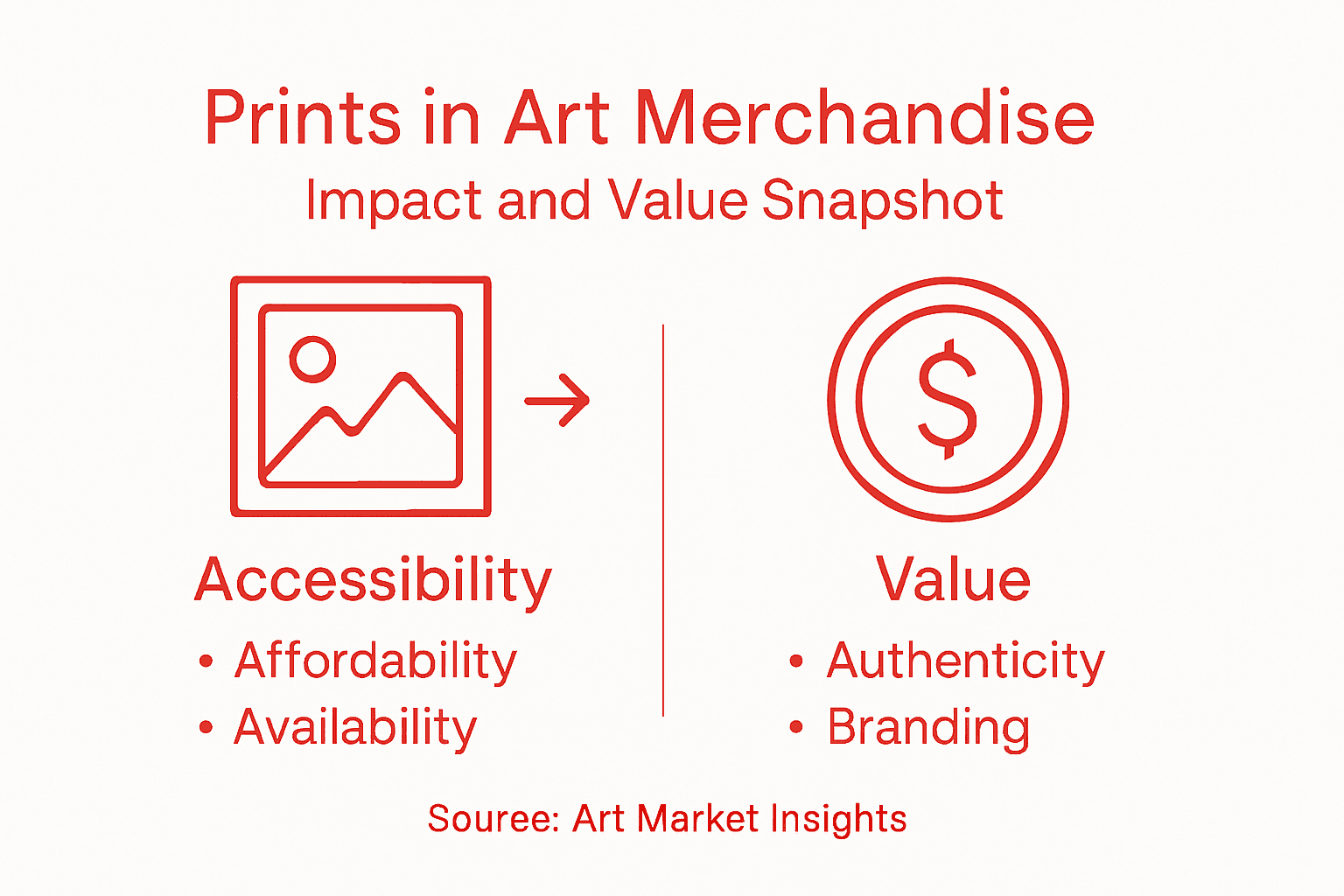
| Prints Enhance Art Accessibility | Art prints provide affordable alternatives, allowing a wider audience to appreciate and own art beyond traditional gallery settings. |
| Diverse Techniques Offer Unique Benefits | Various printmaking techniques, like Relief and Intaglio, provide artists with options that suit different markets and artistic intentions. |
| Quality Standards are Essential | High-quality art prints require attention to detail across production stages, ensuring fidelity to the original artwork and longevity of the prints. |
| Branding is Crucial for Success | Effective artist branding and digital presence can significantly enhance market visibility and connect artists with their audience. |
Defining Prints in Art Merchandise Today
Prints in art merchandise represent a dynamic intersection of artistic expression and commercial accessibility. These reproduced artworks have transformed how art enthusiasts engage with creative works, enabling broader appreciation and ownership beyond traditional gallery spaces.
In the contemporary art landscape, printmaking techniques involve sophisticated methods of transferring images onto surfaces like paper, fabric, and other materials. Artists utilize diverse approaches including:
- Relief printing: Carving designs into surfaces and applying ink
- Intaglio techniques: Etching images into metal plates
- Lithographic processes: Creating images on specially treated surfaces
These methods allow artists to produce multiple high-quality versions of their original artwork, democratizing art consumption. Contemporary art markets recognize prints as legitimate original artworks, not merely reproductions, due to the intricate skill and intentionality involved in their creation.
Here’s a quick comparison of major printmaking techniques and their best uses in art merchandise:
| Technique | Best For | Unique Advantage |
|---|---|---|
| Relief Printing | Art posters, limited editions | Offers tactile, textured surfaces |
| Intaglio | Fine art collectibles | Enables high detail and rich tones |
| Lithography | Traditional high-volume prints | Reproduces subtle shading effectively |
| Giclée | Museum-quality reproductions | Exceptional color fidelity and longevity |
| Screen Printing | Apparel and bold graphic artworks | Yields vibrant, durable colors |
Prints serve multiple purposes in modern art merchandise, functioning as:
- Affordable art alternatives
- Collectible investment pieces
- Accessible representations of renowned artistic works
- Promotional mediums for emerging artists
Technological advancements have dramatically expanded print reproduction capabilities, enabling museum-quality reproductions that capture intricate details and color nuances with unprecedented precision.
Pro tip: When collecting art prints, always verify the edition number and artist’s signature to ensure authenticity and potential future value.
Exploring Types: Fine Art, Apparel, Collectibles
Art prints represent a versatile medium of artistic expression, spanning multiple categories that cater to different consumer preferences and market segments. Art print types range from traditional fine art reproductions to contemporary commercial applications across various platforms.
In the realm of fine art prints, artists utilize sophisticated techniques that preserve artistic integrity:
- Lithographs: Created through stone or metal plate printing
- Etchings: Intricate designs carved into metal surfaces
- Screen prints: Layered color applications using mesh techniques
- Giclée prints: High-quality digital reproductions with exceptional color accuracy
Commercial print applications have revolutionized how art intersects with everyday merchandise. Printing techniques now enable artists to translate their creative visions onto:
- Apparel (t-shirts, hoodies, jackets)
- Collectible items (mugs, posters, limited edition prints)
- Accessories (bags, phone cases)
- Home decor elements
Digital technologies have dramatically expanded print reproduction capabilities, allowing artists to create museum-quality reproductions that capture intricate details with unprecedented precision. These advancements democratize art consumption, making unique artistic expressions accessible to broader audiences.
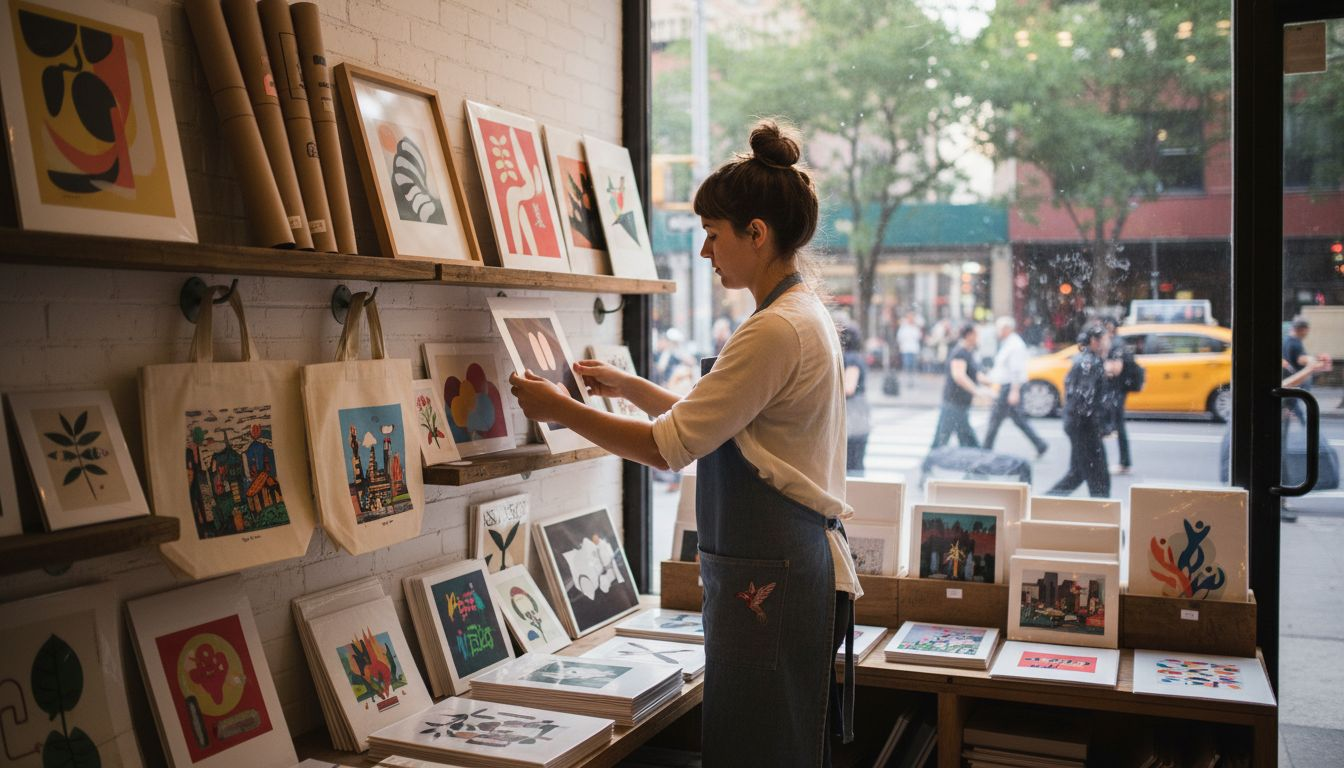
Pro tip: When collecting art prints, examine the printing technique and edition size to understand the potential artistic and financial value of your acquisition.
Quality Standards and Printing Techniques Explained
Art merchandise printing requires meticulous attention to detail and sophisticated technological approaches. High-quality fine art prints demand precision in every stage of production, from initial image capture to final presentation.
The key components of exceptional print quality include:
- Image Resolution: High-pixel density capturing minute details
- Color Accuracy: Precise color matching with original artwork
- Substrate Selection: Archival-grade papers and canvases
- Ink Quality: Fade-resistant, pigment-based inks
- Preservation Techniques: UV-protective coatings and archival treatments
Printing techniques vary depending on the desired aesthetic and application:
- Digital Giclée printing for photographic precision
- Screen printing for vibrant, layered designs
- Lithographic methods for traditional art reproductions
- Sublimation printing for apparel and accessories
Technical Considerations play a crucial role in determining print quality. Factors like color calibration, printer specifications, and environmental conditions significantly impact the final artistic representation. Professional print studios invest in state-of-the-art equipment to ensure consistent, museum-grade reproductions.
Pro tip: Always request color proofs and examine print samples under various lighting conditions to evaluate true color fidelity and detail preservation.
Licensing, Copyright, and Artist Rights
The intersection of art, commerce, and legal protection creates a complex landscape for artists seeking to monetize their creative works. Art licensing agreements provide a critical mechanism for artists to generate revenue while maintaining their intellectual property rights.
Key components of effective art licensing include:
- Usage Scope: Defining specific product applications
- Territorial Rights: Establishing geographic usage boundaries
- Duration: Specifying time frames for licensing permissions
- Compensation Structures: Negotiating royalty percentages
- Exclusivity Terms: Determining single or multiple licensing options
Understanding copyright protections is fundamental for artists navigating commercial opportunities:
- Automatic copyright protection upon artwork creation
- Retaining reproduction and distribution rights
- Controlling commercial use of original work
- Establishing legal frameworks for compensation
Intellectual Property Strategies require careful negotiation. Copyright protection mechanisms empower artists to balance creative expression with financial sustainability. Professional artists must develop sophisticated understanding of legal frameworks to protect their work while exploring commercial opportunities.
Pro tip: Always consult an intellectual property lawyer to review licensing agreements and ensure comprehensive protection of your artistic rights.
Brand Building and Market Reach for Artists
Successful artists understand that building a compelling brand extends far beyond creating exceptional artwork. Artist branding strategies are critical for establishing a unique identity that resonates with audiences and distinguishes creators in a competitive marketplace.
Key elements of effective artist branding include:
- Visual Consistency: Developing a recognizable aesthetic
- Storytelling: Communicating personal artistic journey
- Digital Presence: Maintaining professional online platforms
- Audience Engagement: Creating meaningful connections
- Authenticity: Maintaining genuine artistic voice
Marketing approaches for expanding market reach involve multiple strategic channels:
- Leveraging social media platforms
- Participating in curated exhibitions
- Developing collaborative networks
- Creating compelling artist narratives
Digital Marketing Techniques play a pivotal role in artist visibility. Art marketing strategies enable artists to transcend traditional boundaries, connecting directly with collectors and enthusiasts worldwide. Professional artists must strategically craft their narrative, blending artistic integrity with smart promotional tactics.
Pro tip: Develop a consistent personal brand across all platforms, ensuring your artistic identity remains coherent and memorable.
Challenges, Pitfalls, and What to Avoid
Navigating the complex landscape of art merchandise requires strategic awareness and proactive problem-solving. Visual representation challenges can significantly impact an artist’s ability to effectively communicate their creative vision and maintain market credibility.
Critical challenges artists must anticipate include:
- Overcommercializaton: Losing artistic integrity
- Technical Limitations: Print quality degradation
- Market Saturation: Differentiating artistic work
- Pricing Complexities: Balancing value and accessibility
- Copyright Vulnerabilities: Protecting intellectual property
Specific pitfalls that can undermine artistic merchandise success involve:
- Inconsistent brand messaging
- Poor quality reproduction techniques
- Misaligned target audience targeting
- Inadequate legal protections
Commercialization Risks require careful navigation. Academic research on art commercialization highlights the delicate balance between creative expression and market demands. Professional artists must develop sophisticated strategies that preserve artistic authenticity while exploring commercial opportunities.
The table below summarizes common challenges in art merchandising and strategies to address them:
| Challenge | Potential Impact | Recommended Strategy |
|---|---|---|
| Overcommercialization | Loss of artistic identity | Define clear artistic branding |
| Technical Limitations | Poor print quality | Work with professional print studios |
| Market Saturation | Difficulty standing out | Develop niche or signature styles |
| Pricing Complexities | Lost sales or undervaluation | Research market and tier pricing |
| Copyright Vulnerabilities | Potential for work misuse | Register works and use strong contracts |
Pro tip: Regularly audit your merchandise portfolio to ensure each product maintains your core artistic vision and delivers consistent quality.
Discover Exceptional Art Prints on Everyday Merchandise
The article highlights challenges like balancing artistic integrity with affordable accessibility and ensuring high-quality print reproduction that honors the original creation. For art lovers seeking to experience the vibrant impact of fine prints on everyday items without compromising quality or exclusivity, ArtoramaShop.com offers a curated collection of expertly crafted apparel and collectibles. Featuring artwork inspired by masters such as Picasso and Banksy, each piece is a statement of artistic expression fused with durable, museum-quality printing technologies.
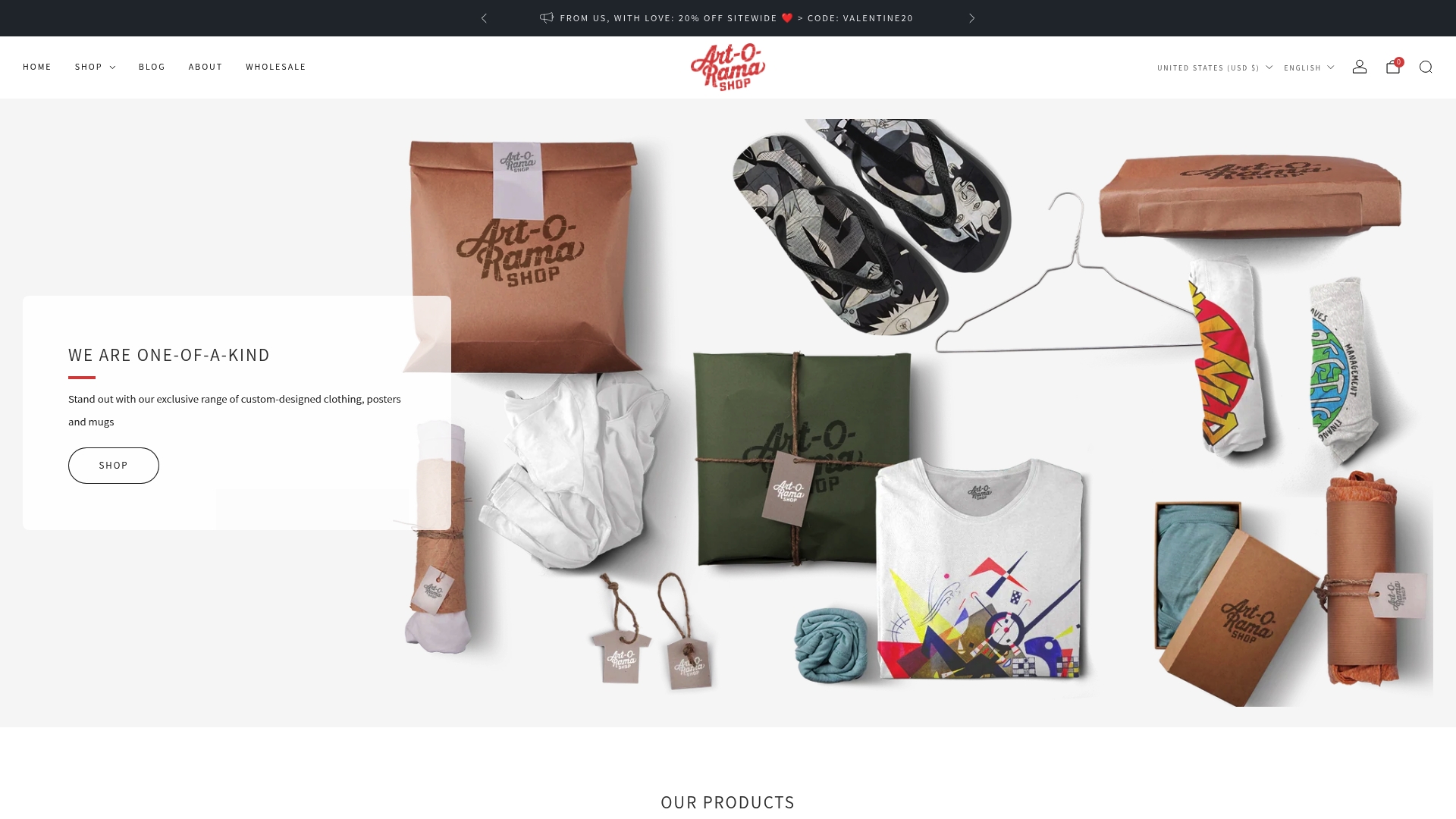
Why settle for ordinary when you can wear or display prints that reflect your passion for art and pop culture? Visit ArtoramaShop.com to explore exclusive t-shirts, hoodies, posters, and mugs that bring art to life. Act now to elevate your collection with unique pieces expertly designed for collectors and enthusiasts alike. Check out our latest selections and secure your connection to authentic artistic value today.
Frequently Asked Questions
What are art prints, and how do they differ from original artworks?
Art prints are reproduced versions of original artworks using various printmaking techniques. Unlike original artworks, which are unique creations, prints can be produced in multiple copies, allowing broader access to art.
What are the common printmaking techniques used in art merchandise?
Common printmaking techniques include relief printing, intaglio, lithography, giclée, and screen printing. Each method has distinct characteristics and is suitable for different artistic applications.
How can I assess the quality of an art print before purchasing?
To assess the quality of an art print, check for high image resolution, accurate color reproduction, use of archival-grade materials, and the quality of inks used. Requesting print samples can also help gauge the overall quality.
What should artists consider when licensing their prints?
Artists should consider the scope of usage, territorial rights, licensing duration, compensation structures, and exclusivity terms when creating art licensing agreements to protect their intellectual property and monetize their work.

